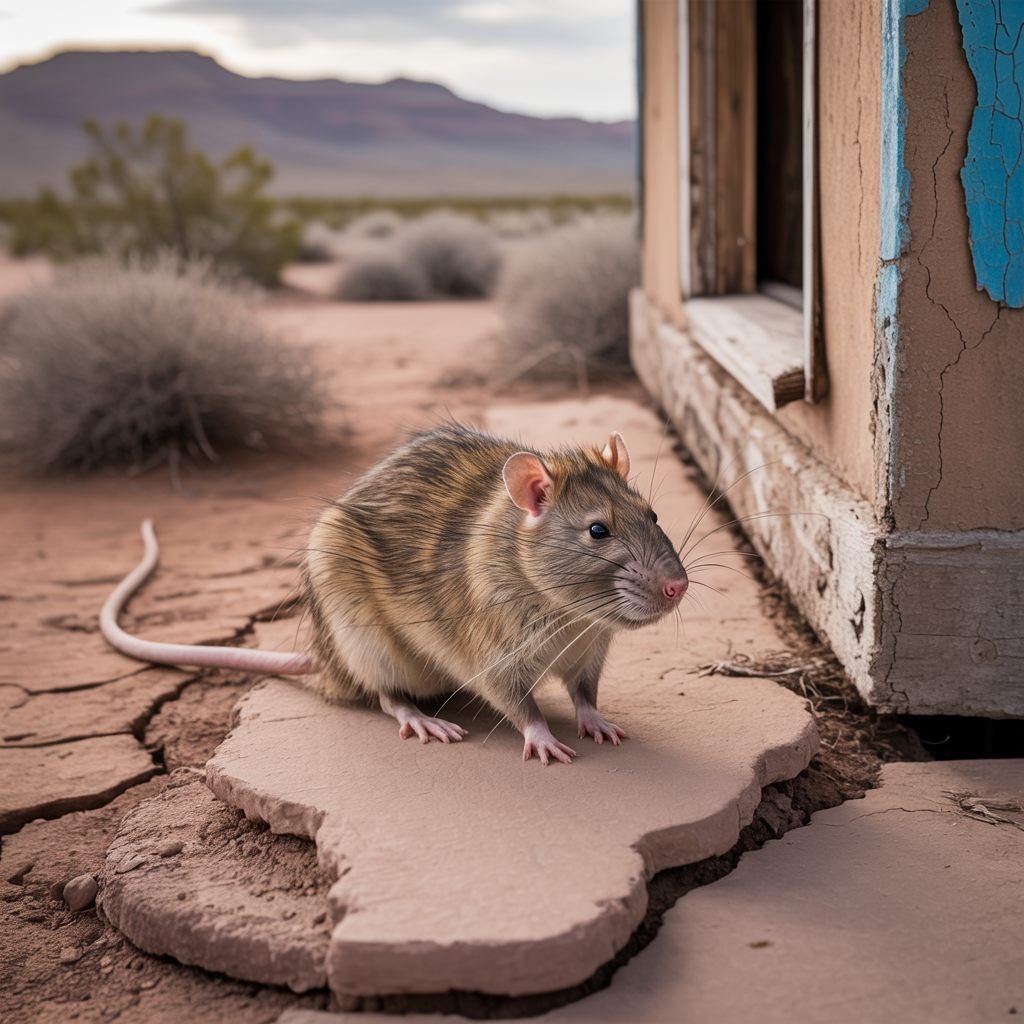
Hearing scratching overhead at night, or noticed one room that suddenly will not cool? Those are the two classic signs of roof rats in a Tucson attic. Roof rats are climbers that enter through the top of the house, which is why the fix is different from anything you would do for a ground-dwelling rodent.
Why roof rats are an attic problem
The roof rat is an agile climber that reaches your roof by way of tree canopy, then enters through the gaps an older Tucson roof provides — open barrel-tile terminations, gable vents, roofline junctions and gaps where additions meet the original structure. Once inside they nest in insulation and chew through duct wrap, which is why a chewed duct dumping cool air into the attic is such a common first clue.
Step 1 — Confirm it is roof rats
Attic noise at night, greasy rub marks along roof edges, half-eaten citrus, and droppings larger than a mouse's all point to roof rats rather than mice or pack rats. If the activity is at ground level and involves stick piles, that is a pack rat instead — see telling them apart.
Step 2 — Cut the bridges to the roof
This is the step homeowners resist and it is half the treatment. Roof rats reach the roof by jumping from branches, palms and wires. Trim any tree so there is a clear gap of several feet between the nearest branch and the roofline, thin overgrown palms, and be aware that a fence or wall running to the house can also serve as a bridge. Seal the roof but leave a branch touching it, and the rats simply keep coming.
Step 3 — Seal the roofline entry points
With the canopy cleared, the roofline gaps get sealed: bird stops at tile terminations, screened gable and roof vents, closed junctions and penetrations. This is skilled work on a tile roof — see how we find entry points on a tile roof — and it is the core of our exclusion service.
Step 4 — Trap the animals inside, then clean up
Traps set on attic runways clear the rats still inside; this is done alongside sealing so nothing is trapped in. Afterwards, contaminated insulation and droppings should be cleaned and decontaminated — both for health and because the residual scent attracts the next rat. See attic insulation damage.
Why not just use poison?
A poisoned rat dies in your attic or wall void, and in a Tucson summer that becomes an odour problem within a day. Poison also kills the raptors that hunt roof rats for free. We trap and exclude instead — it clears the animals and closes the route without those downsides.
Quick answers
How do I know if it is roof rats or pack rats?
Roof rats are up high — attic, roofline, tree canopy — and leave no stick nest. Pack rats are at ground level and build stick-and-debris middens. Many Tucson homes have both.
Do I really have to cut my trees?
You need to clear them, not remove them — a few feet of gap from the roof removes the bridge. It is the difference between a fix that holds and one that fails in a month.
Will they come back?
Not if the roofline is sealed and the canopy is cleared. Recurrence almost always means a bridge or a gap was missed.
Scratching overhead or a room that won't cool? Book a free inspection and we will check the roofline, the canopy and the attic together.
Not sure what you are dealing with?
A free inspection identifies the species, every entry point and the scope of work — in writing, before anyone quotes you a number.