Tile Roofs
Barrel and S-tile create open ridge, hip and eave gaps that are completely invisible from the ground. Roof rats walk straight in.
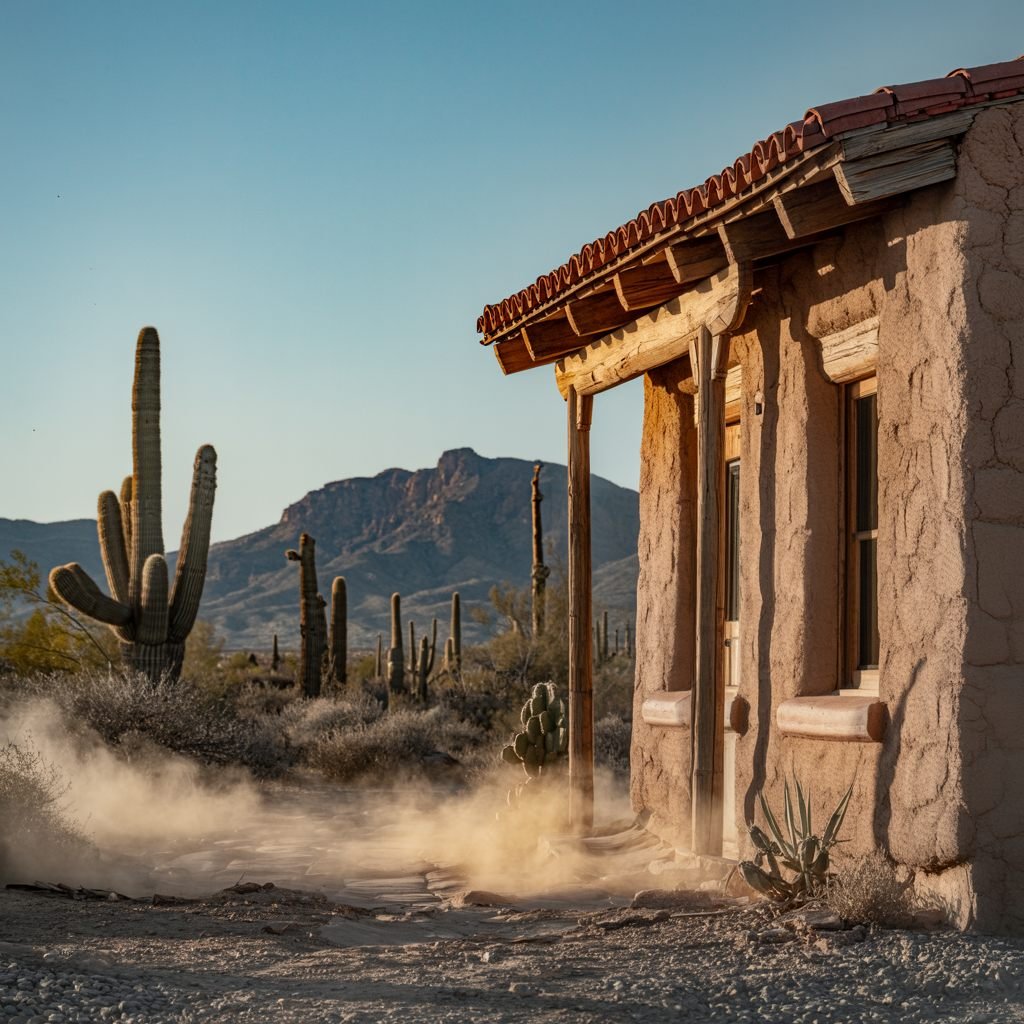
Same/Next-Day Rodent Control in Tucson — Serving Catalina Foothills · Tanque Verde · Oro Valley · Vail · Marana. Sonoran-Desert specialists in full-structure exclusion — tile roofs, block-wall weep holes, attic voids and engine bays sealed for good.
If you are hearing scratching in the attic, finding droppings in a cabinet, or you just opened your hood and found a nest of twigs sitting on the engine block, you are dealing with one of Tucson's three common pest rodents — roof rats, pack rats, or house mice.
The fix is a three-part process, and the order matters: inspection to identify the species and every entry point, exclusion to seal those points shut, and trapping or humane removal to clear whatever is already inside. Skip the middle step and you are simply removing tenants from a building with the doors still open. That is the single most common reason homeowners tell us they have "tried everything" and the noises came back three weeks later.
Do-it-yourself traps alone rarely finish the job here, because our tile roofs, block walls, drip irrigation and citrus-heavy landscaping give rodents far too many ways back in. Effective rodent control Tucson properties actually need is built around sealing the building envelope first, then clearing the population — not the other way around.
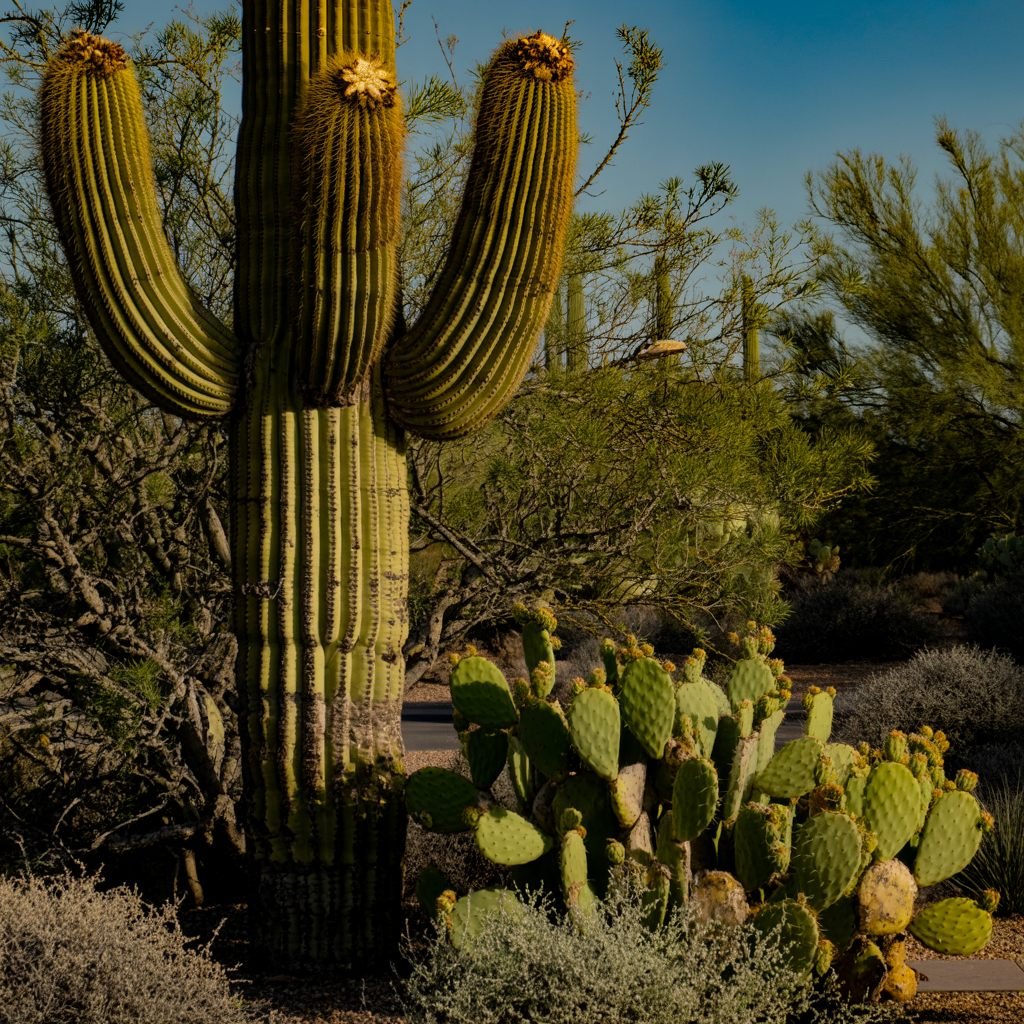
You have probably already tried the internet-generic advice — seal a few obvious holes, set some hardware-store snap traps, maybe scatter a bag of mothballs. And it worked for about three weeks. Here is why that happens.
Barrel and S-tile create open ridge, hip and eave gaps that are completely invisible from the ground. Roof rats walk straight in.
Weep holes and expansion gaps were never designed to be sealed. They are a permanent, code-required doorway unless properly screened.
Canopy touching the roofline is a bridge. Roof rats cross from tree to attic without ever touching the ground — or your traps.
The desert does not offer reliable water. Your emitters do. That single resource pulls rodent pressure toward your yard specifically.
This is the difference between a national franchise reading from a national script and a crew that knows a Catalina Foothills tile roof behaves nothing like a Sam Hughes block-wall bungalow. Meaningful rodent control Tucson homeowners can rely on starts with reading the architecture, not the brochure.
Tucson has three main pest rodent species, and they need genuinely different treatment approaches. What stops a house mouse will not touch a pack rat problem.
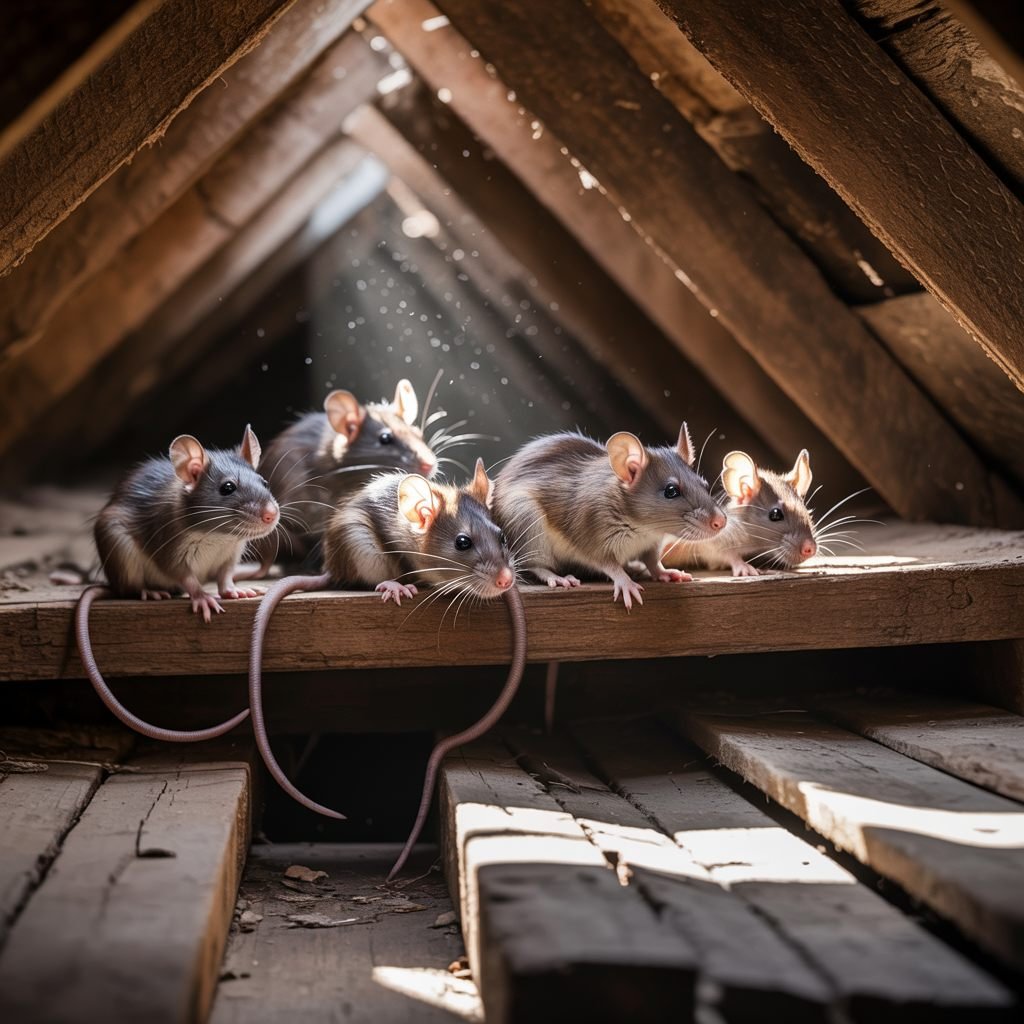
Rattus rattus
Dark fur, tail longer than the body, an exceptional climber. The number-one attic invader in citrus-dense central and midtown Tucson neighbourhoods.
Roof rat identification
Neotoma spp. (woodrat)
Soft cinnamon-grey fur, large ears, furry tail. Builds bulky stick-and-cactus nests called middens — and treats a warm engine bay as prime real estate.
Pack rat behaviour
Mus musculus
Small, grey with a pale belly, breeds fast. Squeezes through a gap the width of a pencil, which is why partial sealing never works on mice.
Mouse control guideNo — and this is one of the most common mix-ups we run into on inspections. Both are pest rodents in Tucson, but they belong to entirely different genera. Roof rats and house mice sit in family Muridae, the "true rats and mice." Pack rats belong to genus Neotoma, a separate lineage altogether, named for their habit of "packing" — hoarding shiny debris, insulation, wire ties and plant material into large nest structures called middens.
Every rodent shares one defining trait regardless of species: a single pair of continuously growing upper and lower incisors that must be worn down through constant gnawing. The order name Rodentia comes from the Latin rodere, "to gnaw." That is not a piece of trivia — it is the precise reason all three species chew through wiring, duct insulation and stored food. It is not random destruction. It is biology, and it does not stop on its own.
Worth knowing: not every member of order Rodentia is a pest. Guinea pigs, porcupines, beavers and squirrels are all rodents too — they are simply not the species invading Tucson attics and engine bays. Kangaroo rats (family Heteromyidae) are native Sonoran Desert residents, remarkable for surviving without ever drinking free water, but they are rarely the cause of structural damage. Most kangaroo rat sightings are a yard-management issue, not a home-invasion one, and we will tell you that honestly rather than sell you a treatment you do not need.
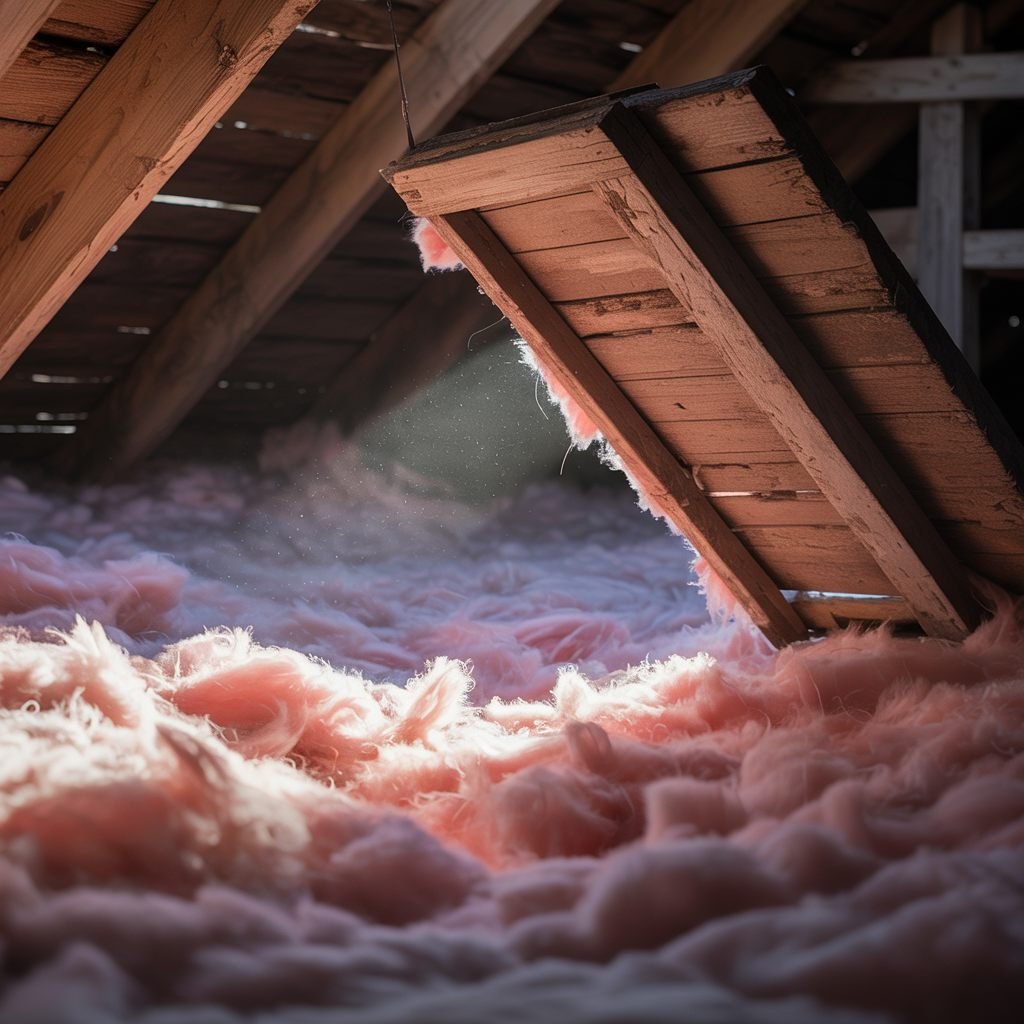
Most homeowners call us at week three. The ones who call at week one pay less and lose less insulation. These are the signals worth acting on:
If you can tick two or more of those, you are past the point where a single trap solves it. A proper rodent control Tucson inspection will tell you the species, the population scale and the entry count in one visit.
Droppings identification guideThis is the one that catches Tucson drivers completely off guard. You do not need a rodent problem inside your house to get hit — pack rats specifically target parked vehicles, and local auto shops treat this as a routine repair category, not a rare one.
Why it happens: pack rats are nocturnal and drawn to warm, dark, sheltered cavities. An engine bay after an evening drive is exactly that — and it comes with a ready supply of leaves, twigs and palm fibre from your own landscaping to build with. Once inside, they chew wiring looms, vacuum hoses and sound insulation, which can disable a vehicle outright or run from several hundred to well over a thousand dollars in repair.

Most pest control sites stop at "rodents carry disease" and leave it there. That is not enough information to actually protect your household, so here is the specific mechanism.
Pack rat middens are a documented breeding site for kissing bugs (Triatoma species). A midden built against or under your home lets them migrate in through cracks and bite occupants at night. For most people that is a minor bite; in sensitized individuals reactions can escalate to serious allergic responses.
Roof rat and house mouse urine contains major urinary proteins (MUPs) that become airborne as droppings and urine dry. These are recognised allergy and asthma triggers, particularly in children.
White-throated pack rats are documented carriers of arenaviruses transmissible to humans through contact with droppings or nesting material — which is why midden removal is handled with PPE, not a shovel and a t-shirt.
Here is the pattern worth paying attention to: unlike outdoor pollen allergies, symptoms from rodent allergens tend to get worse specifically when you are at home. If your allergies do not line up with the Tucson pollen calendar, that is a signal. None of this is meant to alarm you — it is meant to explain why "just set some traps" is not the whole answer, and why exclusion and sanitation carry as much weight as removal in serious rodent control Tucson work.
Sometimes DIY is genuinely the right call — a single house mouse caught early with correct snap-trap placement is a reasonable weekend job. Here is exactly where it breaks down in Tucson.
| Factor | DIY | Professional |
|---|---|---|
| Species identification | Usually guessed from droppings | Confirmed on inspection |
| Entry point sealing | Ground level only — tile roof and eave gaps missed | Full exterior, roofline and attic inspection |
| Pack rat middens | Usually left in place, so they regrow | Fully removed and the site treated |
| Kissing bug risk | Not assessed | Identified during midden inspection |
| Repeat infestation rate | High — new rodents reuse old entry points | Low — points are sealed, not just trapped around |
| Car engine damage | Reactive only, after the wiring is chewed | Preventive, with exclusion advice included |
Here is the clearest diagnostic we can give you: if you have already set traps and you are still hearing activity two to three weeks later, that is not a signal that you need more traps. It is a signal that the entry points were never actually closed. That single realisation is what separates homeowners who solve this once from homeowners who re-buy traps every spring.
Why snap traps stop workingFive steps, in this order, on every rodent control Tucson job we take. No upsells bolted on mid-visit.
Full interior and exterior walkthrough — attic, roofline, foundation, block walls, and any vehicles or outbuildings on the property. We identify the species, every entry point, and any midden locations, then show you photos of what we found before we quote anything.
Sealing the confirmed entry points: roofline and tile gaps, weep holes, vent screens, door sweeps, plumbing penetrations and foundation cracks. This is the step that stops re-infestation rather than just clearing the current one — and it is the step most cheap quotes quietly omit.
Trapping and, where appropriate for the species, humane capture-and-release. Placement is tailored to the species found — pack rat sets look nothing like a house mouse set, and treating them the same is why generic programs stall.
Removal of middens, contaminated insulation and accumulated droppings where accessible, using proper PPE and containment so nothing gets aerosolised into your living space during cleanup.
A specific, property-level plan: canopy trimming distances, irrigation adjustments, woodpile relocation or vehicle-protection steps, depending on what drew rodents to your property in the first place. Written down, not just mentioned at the door.
Inspections are free, and full exclusion and treatment plans typically land between $700 and $2,500 depending on the number of entry points, whether attic decontamination is required, and the size of the property — with partial exclusion jobs starting around $250.
A straightforward single-mouse job in a midtown rental sits at the bottom of that range. A long-standing roof rat colony in a 3,200 sq ft Foothills home with chewed ducts and a contaminated attic sits at the top. Anyone quoting you a firm number over the phone before seeing your roofline is guessing — and the guess is almost always revised upward once they arrive.
We give you an exact figure after the inspection, in writing, itemised by exclusion point — not a range shouted through a phone. Honest pricing is part of why homeowners searching for rodent control Tucson keep coming back to us instead of the franchise with the loudest radio spot.
Get an exact quote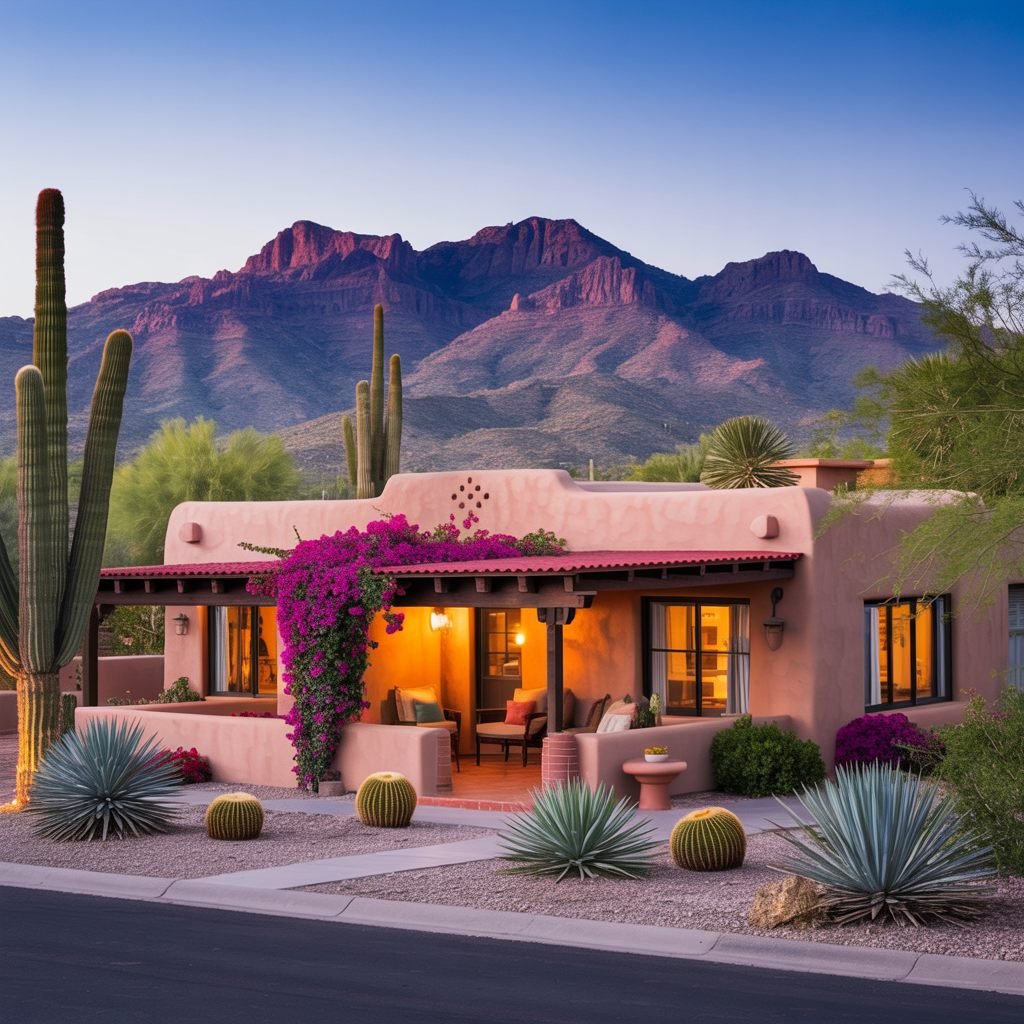
Every area has its own pressure pattern. Foothill properties near washes see heavier pack rat activity; citrus-dense central neighbourhoods see more roof rat pressure from canopy access to the roofline. We adjust the exclusion plan accordingly.
“We had scratching in the attic for two weeks and one room that would not cool down. Their tech found roof rats getting in by a gap at the tile ridge and chewed duct wrap up there. They sealed the roofline, cleared the nest, and it's been quiet for over a year now.”
“Found a pack rat nest under my truck's hood and the wiring was already chewed. They cleared it, cleaned out the engine bay so the scent wouldn't draw another one back, and showed me a couple of simple deterrents. No repeat since.”
“They found and removed a pack rat midden built against our block wall that we didn't even know was there — and explained the kissing-bug risk that comes with it. Thorough, and they walked us through making the yard less attractive to them.”
“New build and we still had roof rats coming in through unscreened weep holes and a roofline gap. They sealed every entry point and gave us an itemized list of exactly what they closed and where. Exactly the kind of detail I wanted.”
“Mice in the garage every fall. They sealed the gaps, set up a prevention schedule, and the follow-up visit was on time. One small scheduling mix-up early on, but they owned it and made it right.”
“After the rats were gone they cleaned and decontaminated the attic and replaced the ruined insulation. Professional the whole way, and they sent photos of the before and after. Worth every penny.”
Reputable Tucson providers offer humane capture-and-release options for pack rats and other wildlife-adjacent species alongside standard trapping and exclusion. Ask directly about method options during your inspection — a company that cannot answer that question clearly is telling you something.
Pack rats sit in a grey zone — technically native wildlife, but functionally a pest rodent problem for homeowners. A provider experienced with both pest work and light wildlife exclusion is the right fit. A pure pest-only outfit will often trap without removing the midden, which simply resets the clock.
If entry points are properly sealed, re-infestation risk drops sharply. Most repeat problems happen because trapping was done without exclusion — the door was never actually closed. In an active Tucson neighbourhood with ongoing pressure from washes and citrus, an unsealed home can be reoccupied within weeks.
Ventilate the area first and avoid sweeping or vacuuming droppings directly, since that can aerosolise particles including MUPs and potential pathogens. Lightly mist the area with disinfectant before cleanup, wear gloves and a mask for larger accumulations, and have attic-scale contamination handled professionally.
Yes. Restaurants, warehouses, HOAs, self-storage and multi-unit properties follow the same core process, scaled up — with documentation suitable for health inspections. Commercial rodent control Tucson businesses need usually hinges on loading docks, roll-up door seals and dumpster placement more than anything inside the building.
Plan on 45 to 90 minutes for a typical single-family home. Larger Foothills properties with detached casitas, multiple outbuildings or extensive block walls take longer. You get photos of every entry point we find and a written scope before any work begins.
It changes it. Summer storms flood washes and burrows, pushing pack rats and mice toward higher, drier shelter — which frequently means your garage, attic or engine bay. Autumn cool-down then drives a second wave indoors. Those two windows are when rodent control Tucson call volume reliably spikes.
Exclusion work is warrantied — the specific terms and duration are stated in writing on your scope document before you approve it. Ask any company you are considering to put their guarantee in writing too; verbal assurances are worth exactly what you paid for them.
We will identify exactly what you are dealing with — species, entry count and scope — before we recommend anything. No contracts, no pressure, and a written quote you can compare against anyone else offering rodent control Tucson homeowners are shopping for.
hello@rodentcontroltucsonaz.com
Demo number. (520) 555-0142 is from the reserved 555-01xx fictional range, so it cannot ring a real person. Replace it everywhere before you go live.
Waiting costs insulation, ductwork and sometimes wiring. A same-day inspection tells you exactly what you are dealing with, and what it will take to end it.