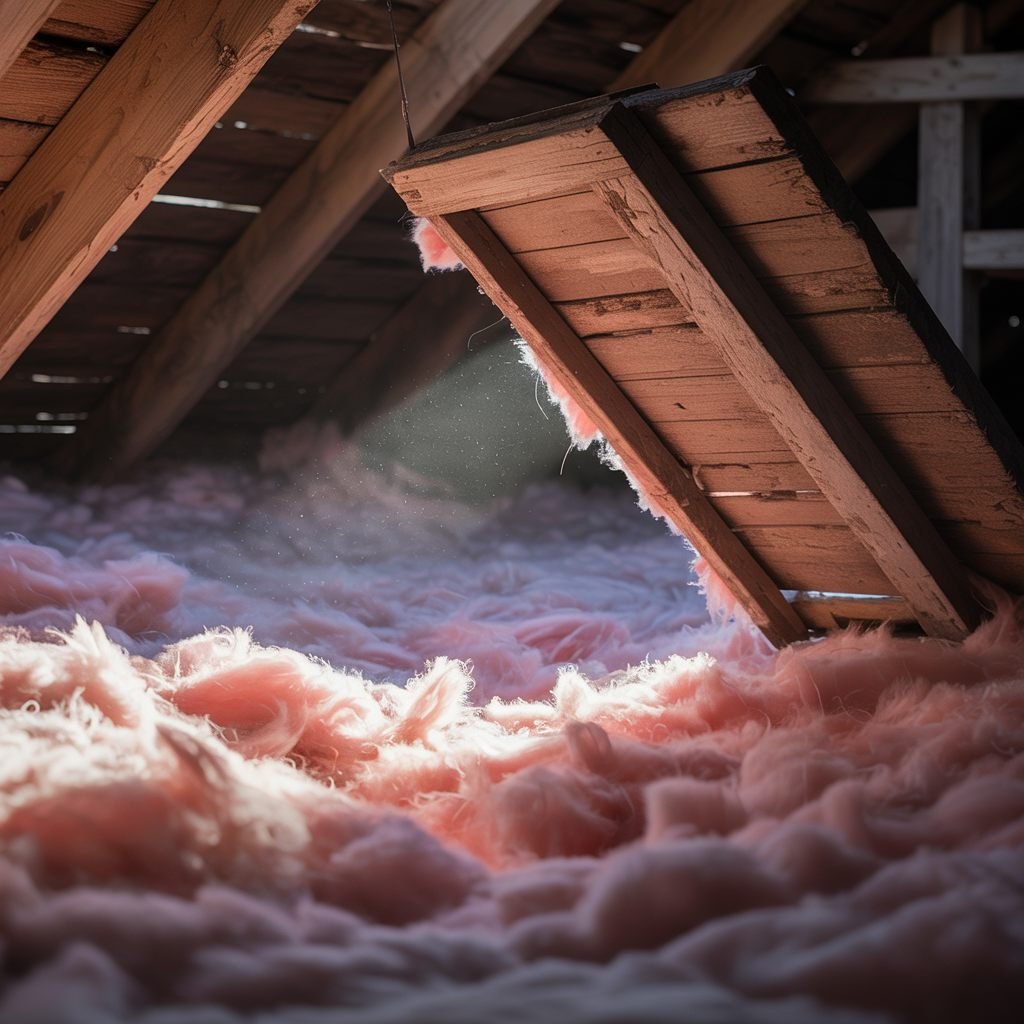
The attic is where a Tucson rodent problem becomes expensive. It is also the space homeowners look at least often, which is why populations get established there before anyone notices.
The species is almost always roof rats, which enter at the roofline and never touch the ground. Occasionally mice, and occasionally pack rats where a roof is accessible from a wall or tree.
Inspecting safely
Two rules before you go up.
Do not walk into an attic with visible contamination. Disturbing dried droppings and urine-saturated insulation puts particles into the air, which is exactly the exposure route health guidance warns about. Look from the hatch.
Wear a fitted N95 and gloves if you enter at all. A cloth or surgical mask does not filter this.
If the attic is heavily contaminated or you are not confident on the ladder, stop and have someone else look. In summer, attic temperatures alone are a genuine hazard.
The daylight test
This is the single most useful thing you can do, it takes two minutes, and it costs nothing.
Go up on a bright day, turn your torch off, and let your eyes adjust for a minute or two. Daylight coming through the roof plane shows you openings directly — at the eave line, around penetrations, at ridge ends and where a lower roof meets an upper wall.
Photograph what you see and note the position. Those are your entry points, and they are the thing that has to be closed.
What to look for with the torch on
Trails in the insulation
Rodents follow the same routes repeatedly, compressing the insulation into visible runs. These usually track along the eave line, across the tops of joists and beside duct runs. Follow a trail and it leads to either the nest or the entry point.
Droppings
Concentrated along beams and duct runs rather than spread evenly. Roof rat droppings are around half an inch with pointed ends. A handful suggests a visit; hundreds across the space suggests an established multi-animal population.
Nesting material
Compact balls of shredded insulation, paper or fabric, wedged into corners, soffits and the eave. Roof rats do not collect objects the way pack rats do — it is just shredded bedding.
Damaged duct wrap
Look along every accessible duct run for torn insulation wrap or exposed flex duct. This is the damage with a direct monthly cost.
Wiring
Check accessible runs for chewed insulation on conductors. This is the most serious finding on the list and warrants an electrician if you see it.
Staining
Dark discolouration in the insulation indicates urine saturation. That material is not salvageable.
What the damage costs you
Cooling load. Insulation works by trapping air in loft. Rodents tunnelling through blown-in fibreglass or cellulose compress it, and compressed insulation loses R-value roughly in proportion to the loft it has lost. In a climate where cooling runs most of the year, that is a cost you pay every month until it is fixed.
Ductwork. Cooled air escaping into a superheated attic is pure waste, and it presents as one room that will not keep up.
Removal for nesting. Material physically leaves the thermal envelope and ends up concentrated somewhere useless, leaving thin patches over the ceiling plane.
Contamination. Saturated insulation has to be removed and replaced, which is what turns a modest job into attic decontamination.
Our article on attic insulation damage goes into the numbers in more detail.
Where they are getting in
On a Tucson tile roof, six locations account for nearly all attic entry: eave and rake terminations where bird stops are missing, ridge and hip closures that have cracked out, valleys, plumbing and solar penetrations, failed vent screens, and roof-to-wall junctions on multi-level homes.
Add the canopy bridge — any branch reaching the roofline — and you have the complete picture. Our walkthrough on finding tile-roof entry points covers each one.
The order of work
This sequence is not negotiable, and getting it wrong is how people pay twice:
- Exclusion — seal every entry point
- Removal — clear the existing population
- Decontamination — remove saturated insulation, clean and treat
- Re-insulate — new material to specification
Listening: what the timing tells you
Before anyone goes up a ladder, the pattern of noise is genuinely diagnostic.
Between dusk and roughly 2 a.m. is the classic roof rat window. They emerge shortly after dark, forage, and return before dawn.
Scratching that moves horizontally along a line suggests travel along a beam or duct run. Scratching that stays in one spot suggests a nest site or gnawing activity.
Dragging or rolling means nesting material is being moved — a nest under construction rather than a passing visit, and a reason to act quickly.
Daytime activity usually indicates a heavier population; when numbers rise, competition pushes some animals to forage outside peak hours.
Sudden onset after a monsoon storm is a displacement event — animals pushed out of flooded washes and burrows seeking dry elevated shelter. See monsoon season and rodent activity.
Note the time and the location over two or three nights before your inspection. It genuinely narrows down where to look first.
Is it definitely rodents?
Not always, and it is worth ruling out the alternatives.
Birds nest in gable vents and dryer vents and are active at dawn rather than after dark. Bats produce guano that crumbles to a glittery powder — that is a different job with different legal protections. Lizards in wall cavities make brief scratching sounds and are common here. Duct expansion as the AC cycles produces ticking that people frequently mistake for scratching.
If the noise correlates precisely with the air conditioning starting or stopping, suspect ducting before wildlife.
We have seen homeowners install new insulation while the roofline was still open. It was contaminated within a season. Book a free inspection and you will get photographs of every opening found before anyone quotes a figure.
Want it confirmed properly?
A free inspection identifies the species, every entry point and the scope of work — with photographs, in writing, before anyone quotes a figure.
Explore this section
Signs of Rodents
Most homeowners call at week three. The ones who call at week one pay less and lose less insulation. Here is w…
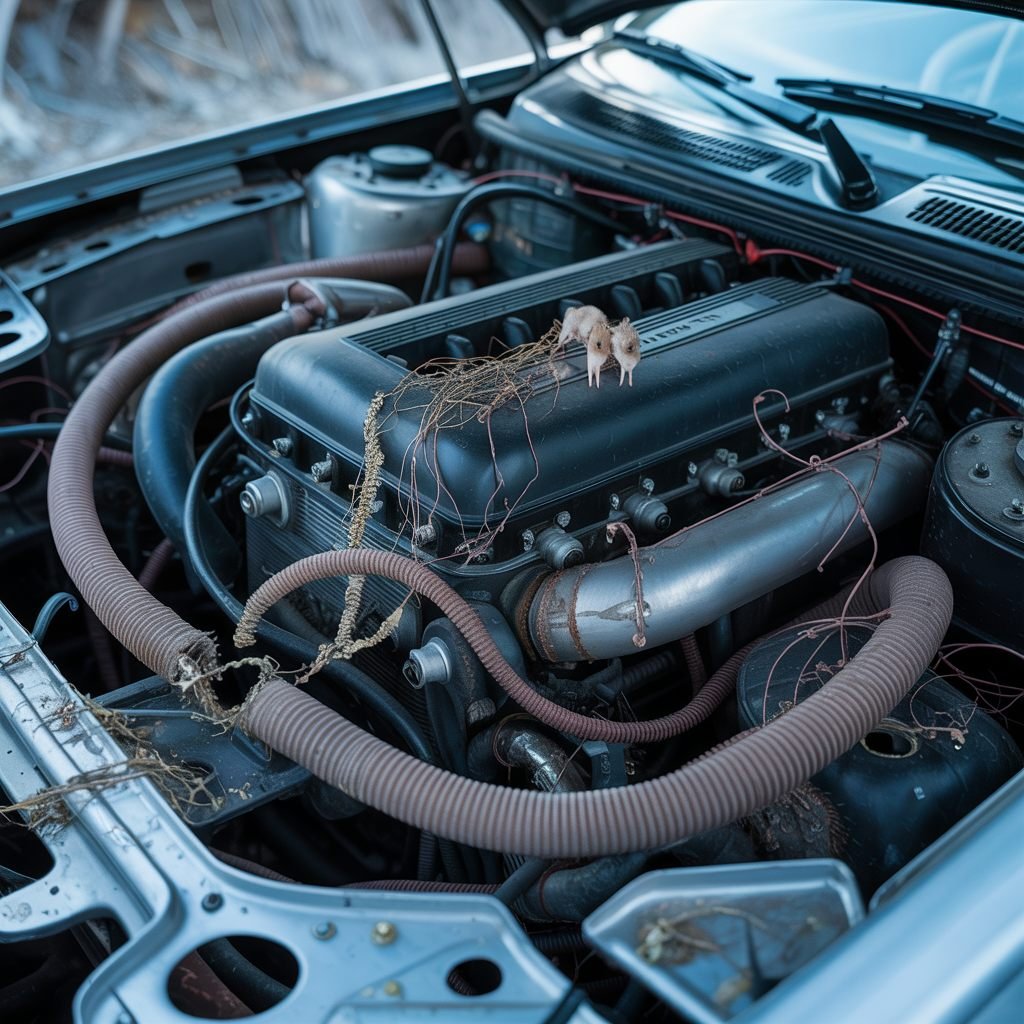
In the Car Engine
Tucson auto shops treat chewed engine wiring as routine, not rare. You do not need a rodent problem in the hou…

In the Yard
Every indoor rodent problem started outside. The yard is where you get a season of warning — if you know what …

Droppings ID
Droppings tell you the species, roughly how many, where they travel and whether the problem is active. Here is…