Attic insulation damage is the part of a rodent problem people notice last and pay for longest. In a climate where cooling runs for much of the year, degraded attic insulation shows up on the utility bill every month until it is fixed.
Three separate kinds of damage
1. Compression and tunnelling
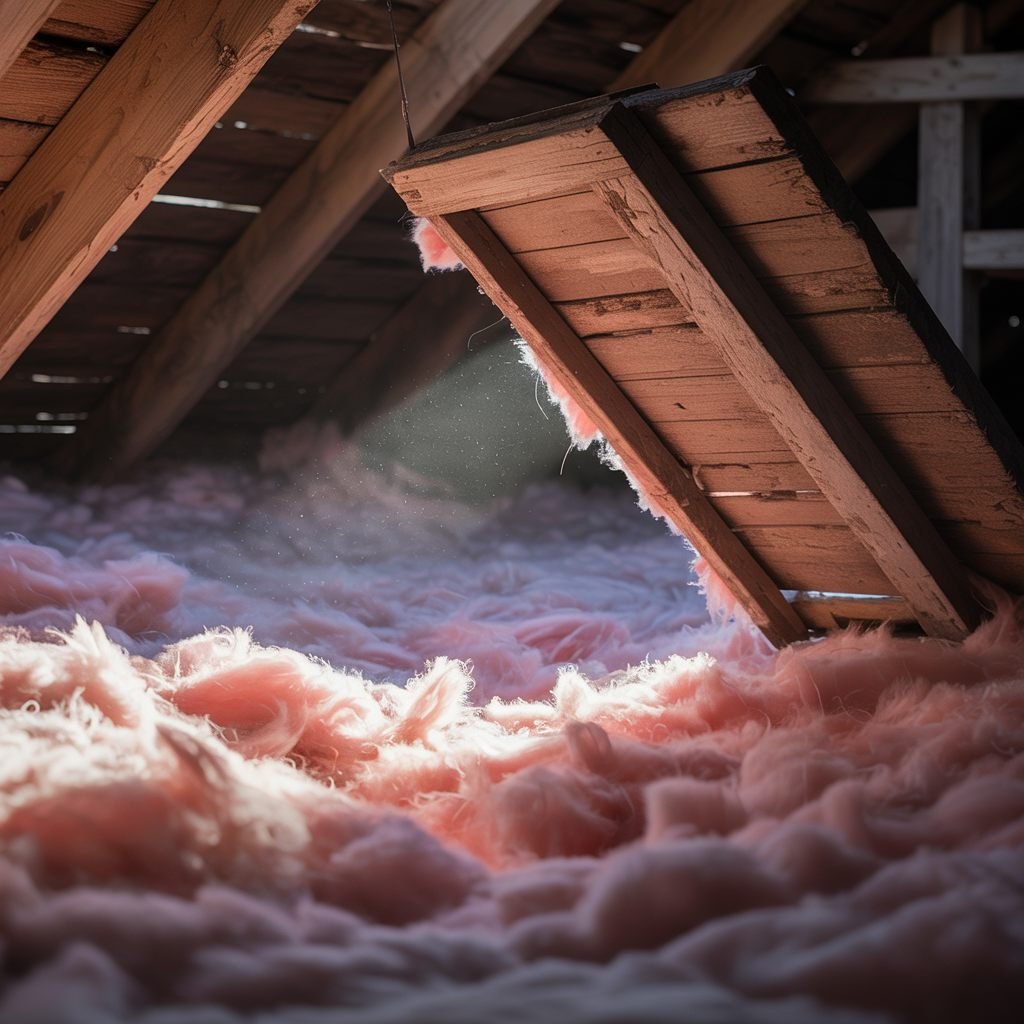
Insulation works by trapping air. Rodents moving through blown-in fibreglass or cellulose compress it and create tunnel networks. Compressed insulation loses R-value roughly in proportion to how much loft it has lost — flatten it by half and you have lost most of the benefit in that area.
This is the most widespread form of damage and the least visible, because from the hatch the attic still looks insulated.
2. Removal for nesting
Roof rats shred insulation to build nests. Pack rats haul it into middens. Either way material leaves the thermal envelope and ends up concentrated somewhere useless, leaving bare or thin patches over the ceiling plane.
3. Contamination
Urine and droppings saturate the material in travel routes and latrine areas. Contaminated insulation cannot be salvaged — it has to be removed and replaced. This is what turns a modest job into a significant one.
The cost you actually feel
Two mechanisms:
Cooling load. Tucson attics reach extreme temperatures in summer. The insulation layer is what separates that from your conditioned space. Degraded coverage means the AC runs longer and more often across the entire cooling season, which in this climate is most of the year.
Ductwork. This is the one that gets people. Attic duct runs are wrapped in insulation, and rodents chew that wrap and sometimes the flex duct itself. A breached duct dumps cooled air into a 150-degree attic. The classic symptom is one room that will not cool while the rest of the house is fine — and the usual first response is to call an HVAC company, who correctly find a duct problem without necessarily identifying what caused it.
If you have a room that stopped cooling properly and you have also heard attic noise, treat those as the same problem until proven otherwise.
The wiring risk
Attic wiring runs through and under insulation, and rodent gnawing does not distinguish between materials. Chewed insulation on a conductor is a fire risk, and it is the reason we recommend a visual check of accessible wiring runs whenever there has been a sustained attic population.
This is not scaremongering — it is the single most serious consequence on this list, and it is also the one homeowners are least likely to look for on their own.
How to assess it yourself
From the attic hatch with a torch, look for:
- Trails and flattened runs across the insulation surface
- Uneven depth — hollows and bare patches over the ceiling
- Droppings concentrated along beams and duct runs
- Shredded material gathered in corners or against the eave
- Torn duct wrap or exposed flex duct
- Staining or discolouration, which indicates urine saturation
Do not walk into the attic to inspect if there is visible contamination — that is precisely when disturbance becomes a health issue.
Repair sequence
The order is not negotiable, and it is where money gets wasted:
- Exclusion first. Seal every entry point.
- Removal. Clear the existing population.
- Remediation. Remove contaminated insulation, clean and treat the space.
- Re-insulate. New material to current specification.
Re-insulating before sealing means paying twice. We have seen homeowners install new insulation while the roofline was still open, and the new material was contaminated within a season. Get the sequence right and the job is done once.
Worth checking with your insurer
Coverage for rodent damage varies and is often excluded as a maintenance issue, but chewed wiring and duct damage are sometimes treated differently from gradual insulation degradation. It costs nothing to ask, and documentation from an inspection helps if you do file.
Not sure what you are dealing with?
A free inspection identifies the species, every entry point and the scope of work — in writing, before anyone quotes you a number.