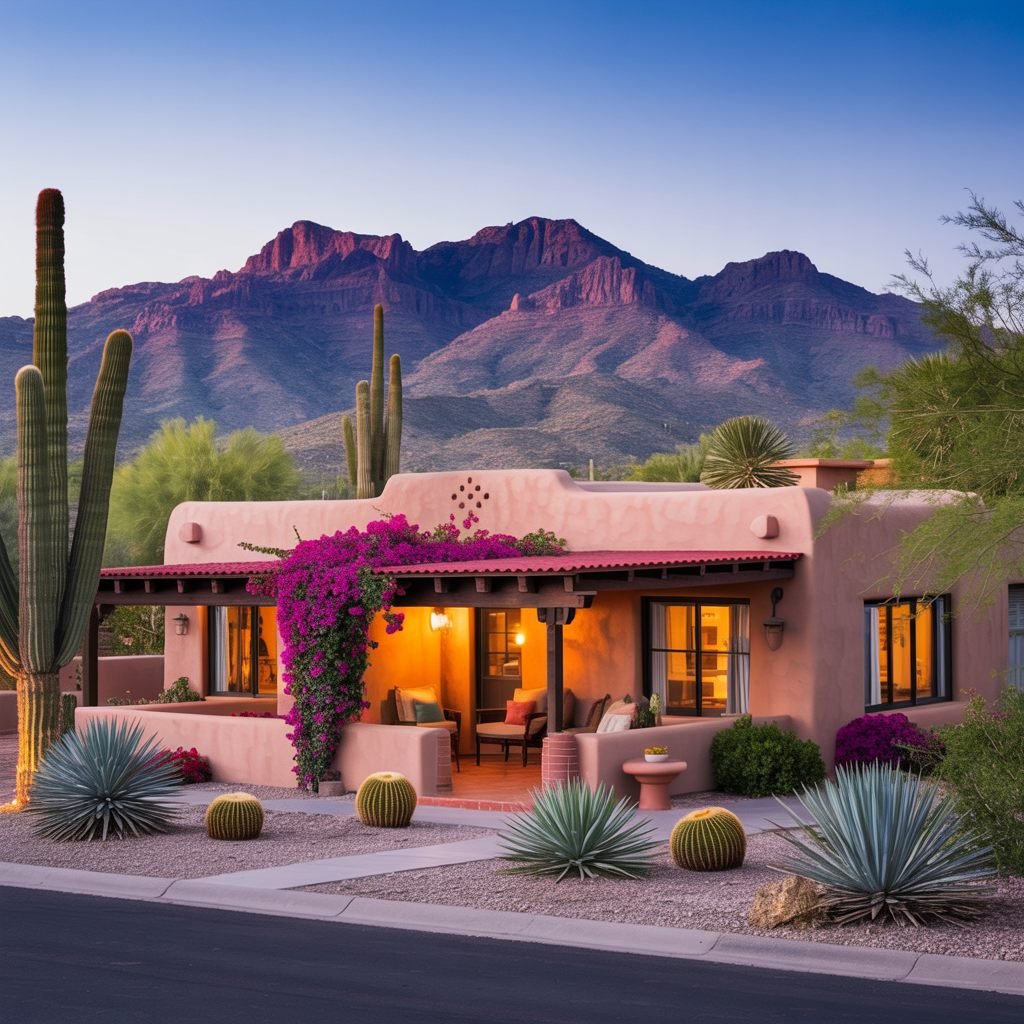
Oro Valley sits north of Tucson against the Catalinas and Tortolitas, with a large share of the housing stock built in the last thirty years and a great deal of it directly adjacent to preserved desert.
That combination produces a specific pattern: houses that are generally well constructed and reasonably tight, facing continuous pack rat pressure from open desert that no amount of construction quality will reduce.
What makes 85737 different
The desert interface
Much of Oro Valley borders preserved or undeveloped desert. That is a large part of why people live here, and it means a permanent adjacent population. Homes backing onto a wash or preserve boundary face pressure regardless of how new the house is.
Newer construction
Good news and a caveat. Newer homes generally have better-fitted vent screens, intact bird stops and sound weep hole detailing. The caveat is that newer does not mean sealed — utility penetrations, AC line sets and garage door seals are just as likely to fail here as anywhere, and the assumption that a modern house cannot have rodents delays a lot of calls.
HOA landscaping
Common-area landscaping is often dense native planting maintained to an aesthetic standard rather than a rodent-pressure one. Mature prickly pear and cholla in common areas are midden sites, and a homeowner cannot unilaterally do much about planting on the other side of their wall.
Tile roofs
Standard here, and even on newer roofs the terminations need checking. Mortar closures crack with thermal cycling regardless of age, and solar installations — common in Oro Valley — introduce penetrations after the roof was built, frequently without proper sealing afterwards.
What we usually find
- Middens along perimeter walls, particularly on the preserve-facing side
- Solar mount penetrations that were not sealed properly after installation
- Garage door corner gaps — the most common house mouse entry in newer homes
- AC line set penetrations where the original foam has degraded
- Cracked ridge closures, even on roofs under twenty years old
- Nests in vehicles parked on driveways adjacent to desert boundary
The HOA conversation
This comes up constantly in Oro Valley and it is worth addressing directly.
If middens are establishing in HOA common areas or in landscaping on the community side of your wall, sealing your own house helps but does not reduce the population. That is a community-level issue, and it is worth raising with the board — particularly if several homeowners are reporting the same thing, which they usually are.
We work with HOAs on exactly this, assessing at community level and giving the board a scoped plan for common areas rather than leaving individual homeowners to treat symptoms one at a time. See commercial and HOA work.
Where landscaping restrictions limit what you can change in your own yard, we will work within them — the four-foot canopy clearance rule and clear-strip recommendation can usually be achieved without breaching CC&Rs, and we can put the reasoning in writing if you need to make the case.
Practical advice for 85737
- Do not assume a newer home is sealed. Check the garage door seal and corners, the AC line set penetration, and any solar mounts.
- Walk the preserve-facing wall quarterly, looking for debris accumulating at the base.
- Keep the wall base clear — 18 to 24 inches of open gravel makes middens obvious rather than hidden.
- Check the hood on driveway-parked vehicles, particularly second cars.
- Report common-area middens to the HOA. One homeowner sealing their house does not fix a community-scale reservoir.
What treatment involves
Standard scope for the structure — roofline, penetrations, weep holes, garage seals — plus midden location and removal on your side of the boundary, plus a habitat plan that works within HOA constraints.
The solar penetration problem
Oro Valley has a high rate of rooftop solar, and it produces a specific and very common finding.
Solar mounts are installed after the roof was built. Each mount and each conduit run breaks the tile field and the underlayment, and the resealing quality varies enormously between installers. We regularly find properties where the original roof was sound and the only meaningful entry point is a solar penetration created five years later.
If you have had solar fitted — or an HVAC replacement, a satellite dish, or new roof-mounted equipment of any kind — that work is worth checking specifically. It is also worth knowing that a roof penetration created by a third party is not covered by a rodent exclusion warranty from work completed before it, which is exactly why our scope documents list every point by location and date.
New-build timing
If your home is in a phase that is still being built out around you, expect intermittent pressure until construction finishes. Each new phase displaces animals into the completed sections next door.
The practical implication is that exclusion is still worth doing — it protects your structure regardless — but habitat-level results will be inconsistent while the surrounding ground keeps changing. We will tell you that upfront rather than let you conclude the work underperformed.
Where pressure originates off your property, we will say so plainly rather than selling you repeat treatments for a source you do not control. Book a free inspection and you will get an honest assessment of what is yours to fix and what is not.
Want it confirmed properly?
A free inspection identifies the species, every entry point and the scope of work — with photographs, in writing, before anyone quotes a figure.
Explore this section
Tucson Areas
Rodent pressure is not evenly distributed across Tucson. Housing stock, elevation, vegetation and proximity to…
Catalina Foothills
Large lots, desert washes and mature tile roofs. The Foothills get both species at once, which is why partial …
Tanque Verde
Wash corridors, acreage and outbuildings. Tanque Verde properties have more structures than the average lot, a…
Vail
Open desert on every side, acreage lots and a lot of stored equipment. Vail is pack rat country, and the vehic…

Sam Hughes
Mature citrus, historic construction and a canopy that connects half the neighbourhood. Sam Hughes is roof rat…
East Tucson
The broadest mix in the metro — 1960s block, 1980s tile and newer infill, all in one area. Which problem you h…