
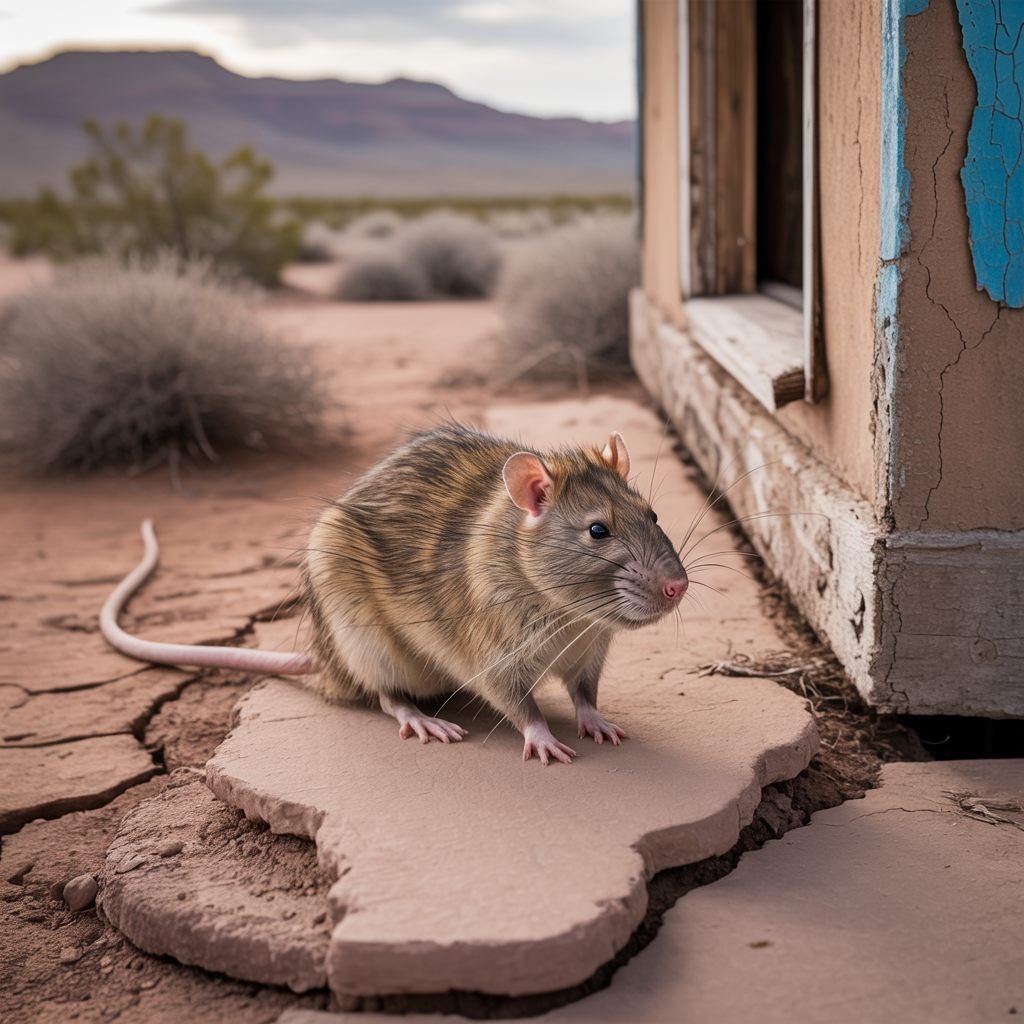
Pack rats — properly woodrats, genus Neotoma — are native Sonoran Desert animals and were living here long before Tucson was. That makes them a slightly awkward category: they are genuine wildlife behaving normally, and they are also the species most likely to cost you a thousand dollars in vehicle wiring.
The name comes from their habit of collecting. Pack rats gather sticks, cactus pads, leaf litter, bottle caps, wire ties, foil and anything else portable, and build it into a structure called a midden. They are also known for swapping — dropping whatever they were carrying when they find something more interesting, which is why the older name "trade rat" stuck.
Identifying a pack rat
- Size: 12–14 inches including the tail
- Fur: soft, cinnamon to grey-brown, with a distinctly pale belly
- Tail: furry, often noticeably bushy — this is the giveaway
- Ears: large and rounded, more furred than a roof rat's
- Build: stockier and softer-looking than a roof rat, which is slim and athletic
If the tail is bare and scaly rather than furry, you are looking at a roof rat and the treatment plan changes completely. Our side-by-side comparison covers the distinction in detail.
The midden is the whole problem
Everything about pack rat control comes back to the midden. It is where they shelter, breed, store food and raise young, and it is built up over time — sometimes across generations.
Middens turn up in predictable places:
- Against the base of block walls, usually on the shaded side
- Inside and underneath woodpiles
- Beneath decks, sheds, stairs and air conditioning units
- In the base of prickly pear and cholla, where spines protect the nest
- Under vehicles, trailers and equipment that sit unmoved
- Inside stacked pots, building materials and general stored clutter
Here is the part that determines whether treatment works: trapping without removing the midden accomplishes very little. The structure remains attractive, the scent marking remains, and the vacancy gets filled — often within weeks. Removal and habitat modification are the same job.
Why they target your car
An engine bay after an evening drive is warm, dark and enclosed on most sides, which is close to a pack rat's ideal. Worse, your own landscaping supplies the building material — palm fibre, mesquite twigs, oleander leaves — usually from within twenty feet of where you park.
Once inside, the constant gnawing that every rodent must do lands on wiring looms, vacuum hoses and sound insulation. Repairs run from modest to well over a thousand dollars, because tracing a fault through a modern harness is labour-intensive even when the parts are cheap.
What actually works: park in a closed garage where possible; leave a mechanic's light under the hood overnight, since pack rats avoid lit ground that exposes them to owls and coyotes; have the bay professionally cleaned after any nest, because the residual scent recruits the next animal; and deal with the staging habitat next to where you park. Our full guide on pack rats in car engines goes further.
The health angle nobody mentions
This is the reason we treat midden removal as protective equipment work rather than yard tidying.
Middens are a documented breeding habitat for kissing bugs (Triatoma species). A midden built against your house lets them migrate indoors through weep holes and door gaps and feed on sleeping occupants at night. For most people the bite is minor; in sensitised individuals reactions can escalate seriously. There is more detail on our kissing bugs page.
Separately, white-throated woodrats are documented carriers of arenaviruses transmissible to humans through contact with droppings, urine and nesting material — particularly when dry material is disturbed and becomes airborne. Middens also routinely shelter rattlesnakes, scorpions and black widows, which is its own reason not to reach into one. See midden removal safety.
How we treat pack rats
- Locate every midden. Properties usually have more than one, and the ones people find on their own are rarely the main structure.
- Remove with containment. Material is wetted with disinfectant before disturbance, bagged at the point of removal and disposed of properly. Never raked dry.
- Treat the site. Ground and surrounding surfaces disinfected, scent marking addressed so the location stops advertising itself.
- Trap the remaining population, with humane capture-and-release where appropriate for a native species.
- Seal the structure at grade — weep holes, utility penetrations, door sweeps, garage seals.
- Modify the habitat. Woodpile relocation, clutter removal, planting thinned back from walls.
That last step is the one cheap quotes leave out, and it is the one that decides whether you are doing this again next year. A site that offered shelter, food proximity and predator protection still offers all three after the nest is gone.
What it costs and what comes next
Pack rat work is priced on the number and size of middens, how much exclusion the structure needs, and whether vehicles or outbuildings are involved. Our pricing page sets out the ranges honestly, and you get an itemised figure in writing after the inspection rather than a number over the phone.
If you have found a nest in a vehicle more than once, that is not bad luck — it means there is an established midden on the property that has not been located yet. That is worth a free inspection.
Want it confirmed properly?
A free inspection identifies the species, every entry point and the scope of work — with photographs, in writing, before anyone quotes a figure.
Explore this section
Rodents
Four species, four completely different problems. Start here to work out which one you are dealing with before…
Roof Rats
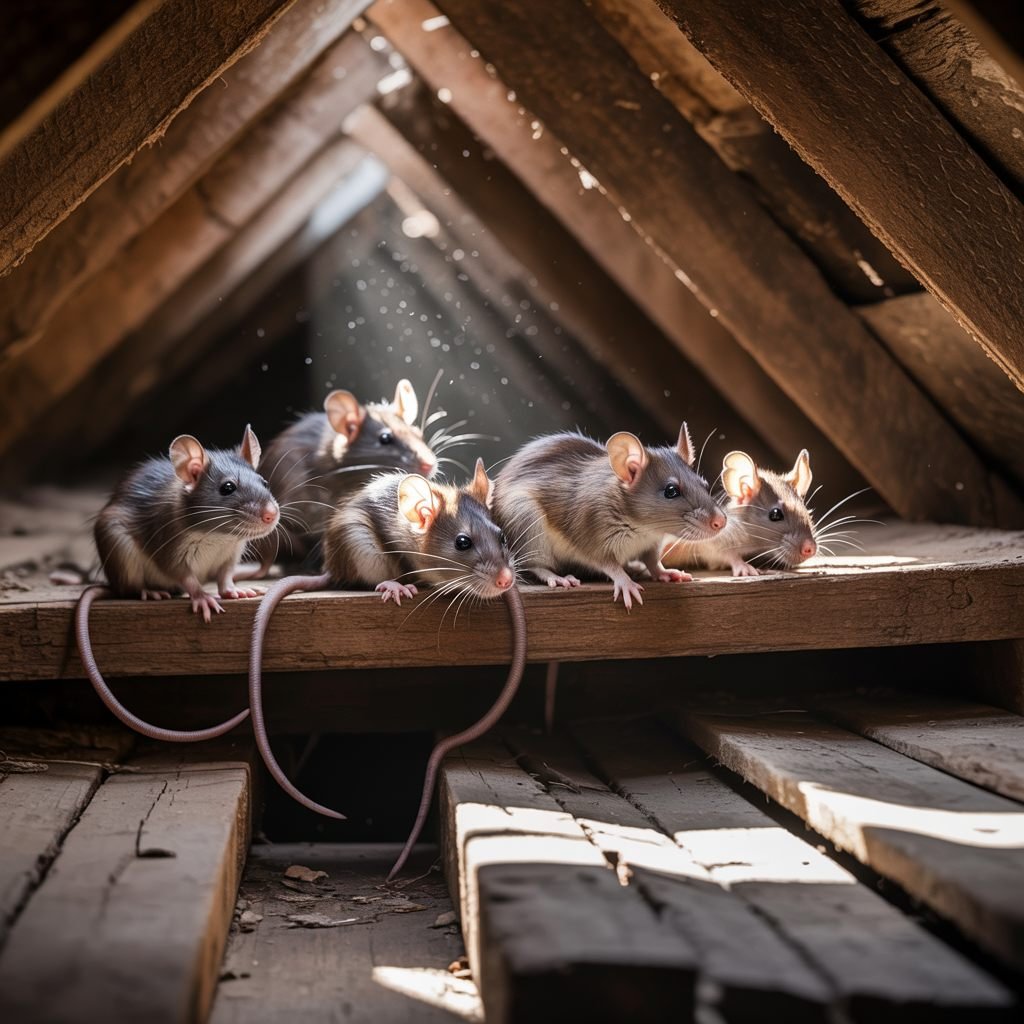
The scratching in your attic is almost certainly this species. Roof rats travel above ground, enter at the roo…

House Mice
The smallest of the three pests and the fastest to multiply. Caught in week one this is a manageable job; left…

Kangaroo Rats
One of the few pages on this site that mostly tells you not to spend money. Kangaroo rats are native, remarkab…

Compare Species
Three species, three treatment plans, and a great deal of wasted money when they get confused. This page settl…