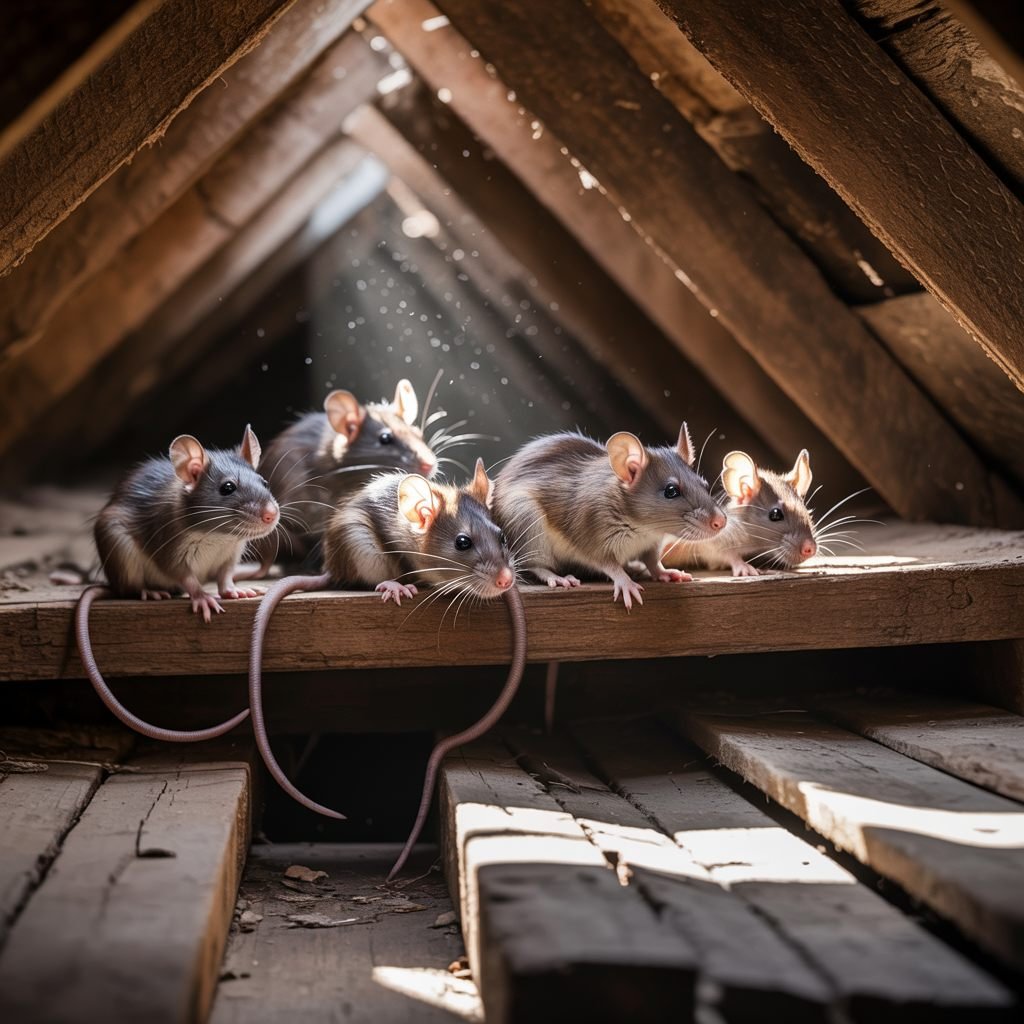
If you are hearing movement overhead between dusk and the small hours, roof rats (Rattus rattus) are the most likely explanation in Tucson. They are also called black rats or ship rats, and they spread globally with human trade, which is how an animal originally from South Asia ended up in Arizona attics.
The defining behaviour is that they live above you. Roof rats are exceptional climbers and strongly prefer elevated travel routes. That one fact explains why most do-it-yourself efforts fail: traps on the garage floor are in the wrong place entirely.
Identification
- Size: 13–18 inches including tail
- Tail: bare, scaly, and longer than the head and body combined
- Fur: dark grey to nearly black, coarse
- Ears: large, thin, sparsely haired
- Build: slim and athletic — built for climbing
- Droppings: around half an inch, with pointed ends, scattered along travel routes
Contrast with a pack rat, which has a furry tail, softer cinnamon fur and stays at ground level. If you found a nest of sticks and cactus in the yard, that is not this animal.
How they get into a Tucson home
Two routes account for the overwhelming majority.
The canopy bridge
Citrus, palm and any mature tree whose branches reach the roofline gives a roof rat a route from ground cover into the attic without ever crossing open ground. They rarely touch soil, which is why ground-level bait and traps miss them completely.
Citrus is particularly attractive because it offers water content, a long fruiting season and dense evergreen cover all at once. A hollowed-out grapefruit still hanging on the branch with the rind intact is a roof rat signature. Our guide on citrus trees and rodents explains how to keep the tree and lose the problem.
The tile roof
Barrel and S-tile roofs leave open voids at every termination. The curve of the tile creates a gap at the eave and rake ends that should be closed with a bird stop or eave riser — and on older roofs those are frequently missing, broken, or were never fitted. Ridge and hip closures crack and fall out with thermal cycling. Valleys, plumbing penetrations, solar mounts and failed vent screens add more.
None of this is visible from the ground, which is why homeowners routinely conclude their house is sealed when it is wide open twelve feet up. Our walkthrough on finding tile-roof entry points covers all six locations.
The damage
Insulation. Roof rats compress it by tunnelling and shred it for nesting. Compressed insulation loses R-value roughly in proportion to lost loft, and in a climate where cooling runs most of the year that shows up on every bill.
Ductwork. This is the one that gets noticed. Chewed duct wrap or a breached flex duct dumps cooled air into a superheated attic. The classic symptom is one room that will not cool while the rest of the house is fine — and the usual first call is to an HVAC company, who find a duct fault without necessarily identifying what caused it.
Wiring. Attic wiring runs through and under insulation, and gnawing does not distinguish between materials. Chewed conductor insulation is a fire risk and the most serious item on this list. See signs of rodents in the attic.
Contamination. Urine and droppings saturate insulation along travel routes and latrine areas. That material cannot be salvaged — it has to come out, which is what turns a modest job into attic decontamination.
Why trapping alone fails
Roof rats breed quickly and the neighbourhood pressure in citrus-dense Tucson is continuous. Remove the animals inside without closing the roofline and the space gets reoccupied — often within a few weeks, because a proven, insulated, predator-free cavity does not stay vacant.
Placement compounds the problem. Rats follow edges — beams, pipe runs, duct lines — rather than crossing open floor. Traps set in the middle of an attic catch very little. And two traps is not an attempt; an active attic warrants a dozen or more set in pairs along identified runs. Our article on why snap traps stop working covers the seven usual mistakes.
How we treat roof rats
- Roofline and attic inspection — every termination, penetration and vent, plus an interior daylight check with torches off.
- Exclusion first — bird stops, ridge closures, stainless mesh at vents, flashing repairs, sealed penetrations.
- Canopy clearance — a specific trimming distance, checked across the whole chain of trees, not just the obvious one.
- Trapping along runs — density and placement based on where the evidence actually is.
- Decontamination — contaminated insulation removed with containment where required.
Breeding and why speed matters
Roof rats reach breeding age within months and produce several litters a year, and an attic is close to ideal conditions — insulated, predator-free, undisturbed, and adjacent to a reliable food supply if there is fruiting citrus nearby.
The practical consequence is that a pair entering in September can be a substantial population by spring without a single additional animal coming in from outside. The gap between "I heard something" and "I called someone" is the largest single factor in what the job ends up costing.
It is also why low-density trapping fails. If removal is slower than reproduction, the population never clears — it plateaus, and the homeowner concludes rats are impossible to get rid of.
Where they go in winter
A common misconception is that quiet means gone. Here it usually means settled.
Roof rats do not hibernate. Through winter they concentrate in whatever warm structure they found in autumn, and citrus fruits through this period, sustaining them when other food is scarce. Attic populations can grow substantially over winter with no new access at all.
If you heard activity in October and it went quiet by December, do not assume it resolved itself. Winter is actually a good time for attic inspection, because the space is workable — unlike July, when it is genuinely hazardous.
Sequence matters. Re-insulating before sealing means paying twice — we have seen new material contaminated within a season because the roofline was still open. Book a free inspection and you will get photographs of every opening found before anyone quotes a figure.
Want it confirmed properly?
A free inspection identifies the species, every entry point and the scope of work — with photographs, in writing, before anyone quotes a figure.
Explore this section
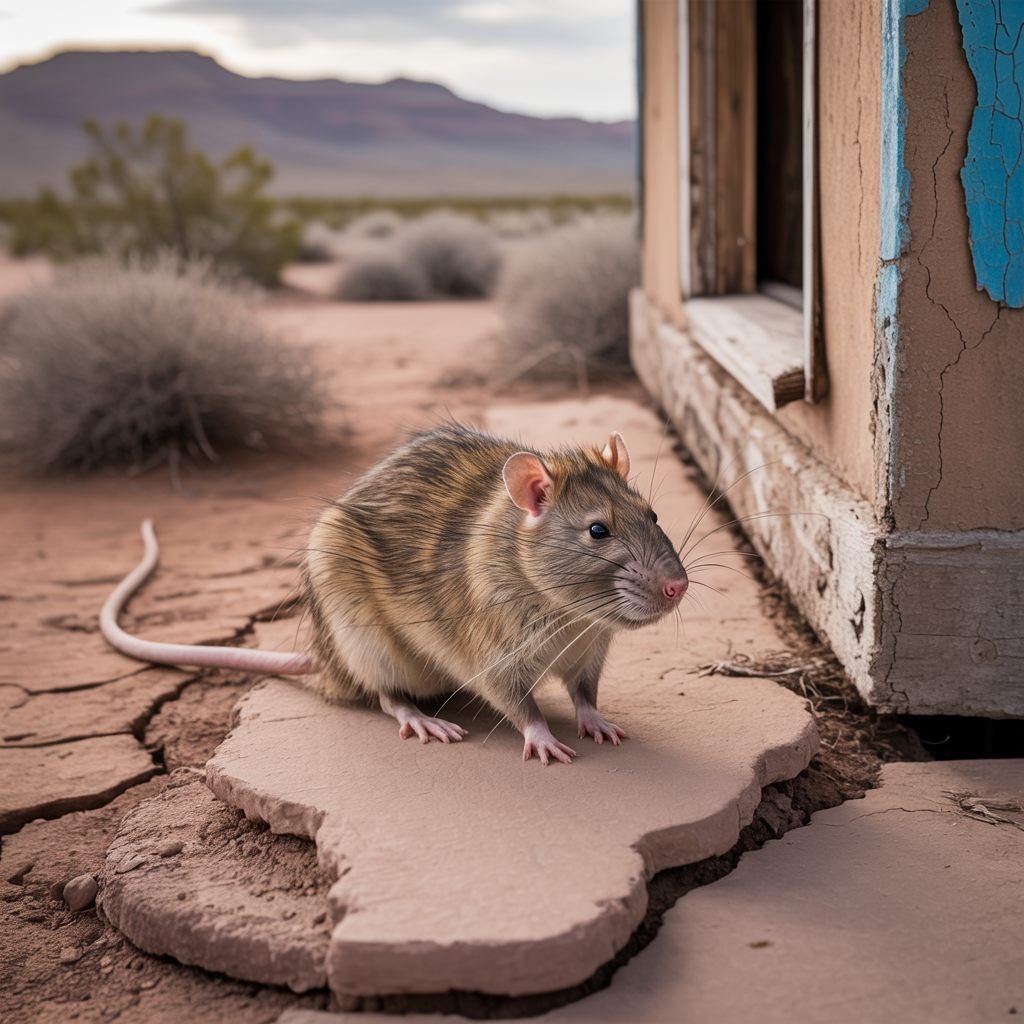
Rodents
Four species, four completely different problems. Start here to work out which one you are dealing with before…

Pack Rats
Native, protected by nothing but common sense, and responsible for most of Tucson's chewed car wiring. Pack ra…
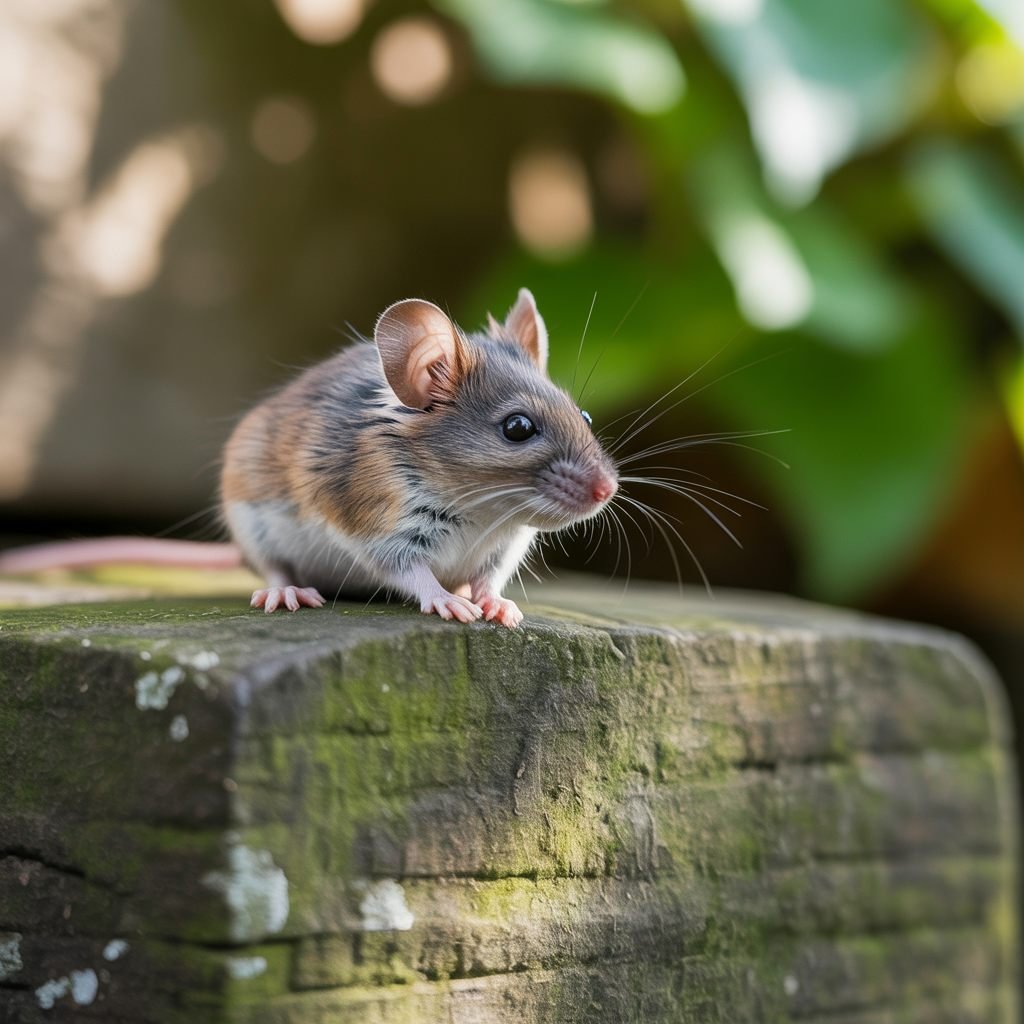
House Mice
The smallest of the three pests and the fastest to multiply. Caught in week one this is a manageable job; left…

Kangaroo Rats
One of the few pages on this site that mostly tells you not to spend money. Kangaroo rats are native, remarkab…

Compare Species
Three species, three treatment plans, and a great deal of wasted money when they get confused. This page settl…