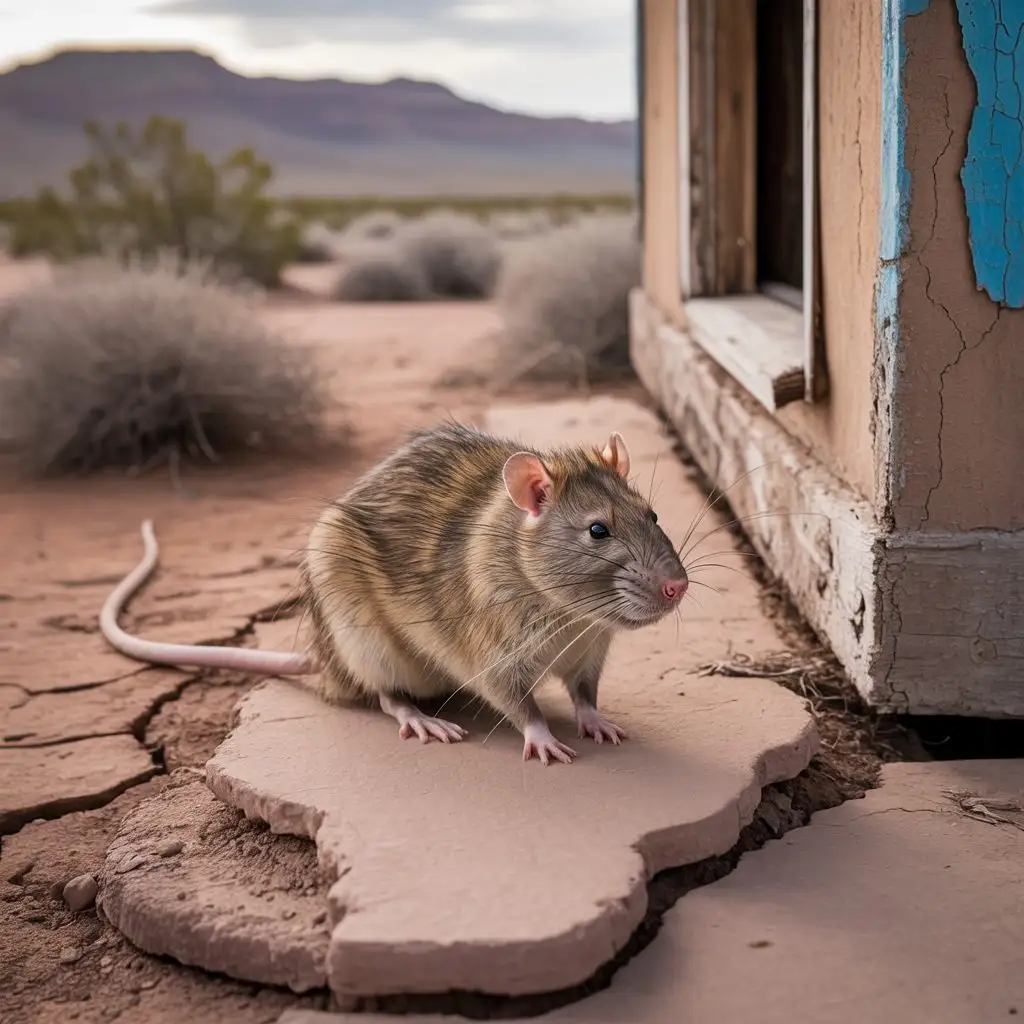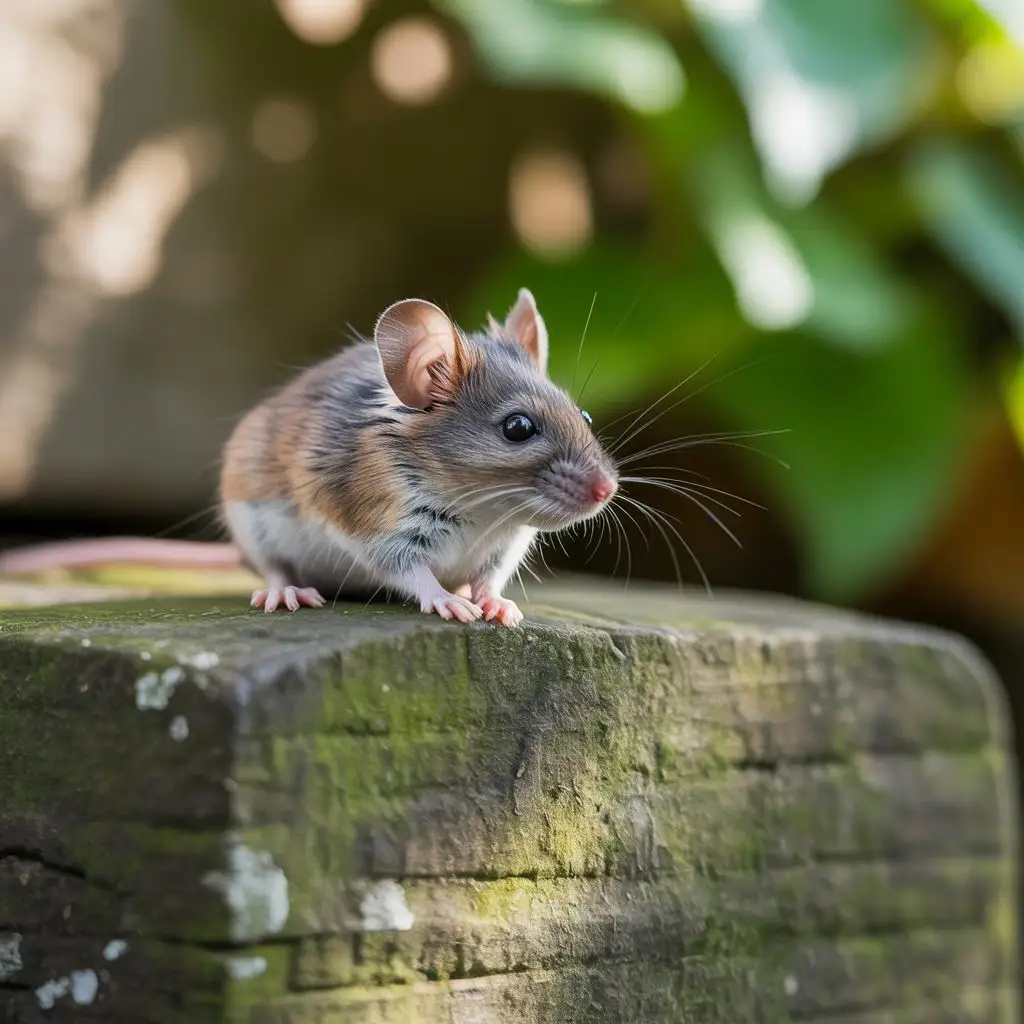
Both are native Sonoran Desert rodents, both are active at night, and both get called “desert rats”. But a kangaroo rat and a pack rat behave very differently around a house. One is a harmless yard animal; the other is the rodent most likely to nest in your engine bay. Here is how to tell them apart.
Side by side
| Trait | Kangaroo rat | Pack rat (woodrat) |
|---|---|---|
| Movement | Hops upright on large hind legs | Runs and climbs on all fours |
| Tail | Very long, with a tuft at the tip | Furry, about as long as the body |
| Body | Small (about 4 in), big head, large eyes | Larger (6–9 in), soft fur, pale belly |
| Home | Burrows in open, sandy ground | Middens of sticks and cactus; garages, engine bays |
| Climbs? | Rarely | Readily: walls, trees, vehicles |
| Comes indoors? | Almost never | Often |
The quickest tell: how it moves
If it hops like a tiny kangaroo, balancing on its back legs with a long tail streaming behind, it is a kangaroo rat. Nothing else around Tucson moves that way. A pack rat scurries low to the ground and climbs well, which is exactly how it ends up on top of an engine block or inside an attic.
Where you find them
Kangaroo rats dig burrow systems in open, sandy or gravelly ground. You will see the entrances in bare patches of yard or along desert edges, often with small trails between them. Around Tucson the most common one is Merriam’s kangaroo rat; in grassier areas you may also see the larger banner-tailed kangaroo rat, which builds a noticeable mound.
Pack rats build middens: piles of sticks, cactus joints, leaf litter and collected debris, usually against a block wall, under a shed or deck, inside a woodpile or at the base of prickly pear and cholla. They also move into garages, storage rooms and vehicles. See our pack rat guide for what middens look like.
Which one needs action?
Usually only the pack rat. Kangaroo rats eat seeds, live underground and very rarely enter buildings. Unless they are digging up a garden bed, there is usually no reason to remove them, and they are native wildlife.
Pack rats are different. They chew wiring, nest in engine bays, contaminate insulation and their middens can shelter kissing bugs. If you have a midden against the house or nesting material under the hood, it is worth dealing with properly: clear the nest, find how it got in, and seal it. See how to get rid of pack rats.
Droppings and signs
Kangaroo rat signs stay outdoors: burrow entrances, small dust-bathing hollows and tracks with paired hind-foot prints. Pack rat signs show up where you do not want them: droppings and urine staining in a garage corner, shredded material in the engine bay, or a growing pile of debris against a wall.
Common questions
Do kangaroo rats come into houses?
Almost never. They live in burrows in open ground and avoid structures. A rodent inside a Tucson home is far more likely to be a pack rat, roof rat or house mouse.
Do kangaroo rats damage cars like pack rats do?
No. Engine bay nests and chewed wiring around Tucson are almost always pack rats, sometimes roof rats. Kangaroo rats do not climb into vehicles.
Should I trap kangaroo rats in my yard?
Usually not. They are native, rarely cause damage and do not threaten the house. If they are damaging a garden, physical barriers around beds are the simplest answer.
Still not sure which rodent it is?
Our rodent control in Tucson starts with identifying the species, because the fix depends on it. See what rodent control costs in Tucson for real price ranges, or book a free inspection: species, every entry point and the scope in writing before anyone quotes you a number.