
Information on this topic tends to sit at one of two extremes: dismissive, or alarming enough to sell a service. The accurate picture is in between, and the practical takeaways are genuinely useful.
This is general information, not medical advice. For anything symptomatic, talk to a doctor.
Hantavirus
Risk level: rare, but serious.
Hantavirus Pulmonary Syndrome case counts across the United States are low in absolute terms, and Arizona records a small number. It is also serious when it occurs, with a significant fatality rate. Rare and serious is an awkward combination, and the right response is not anxiety — it is correct cleanup technique.
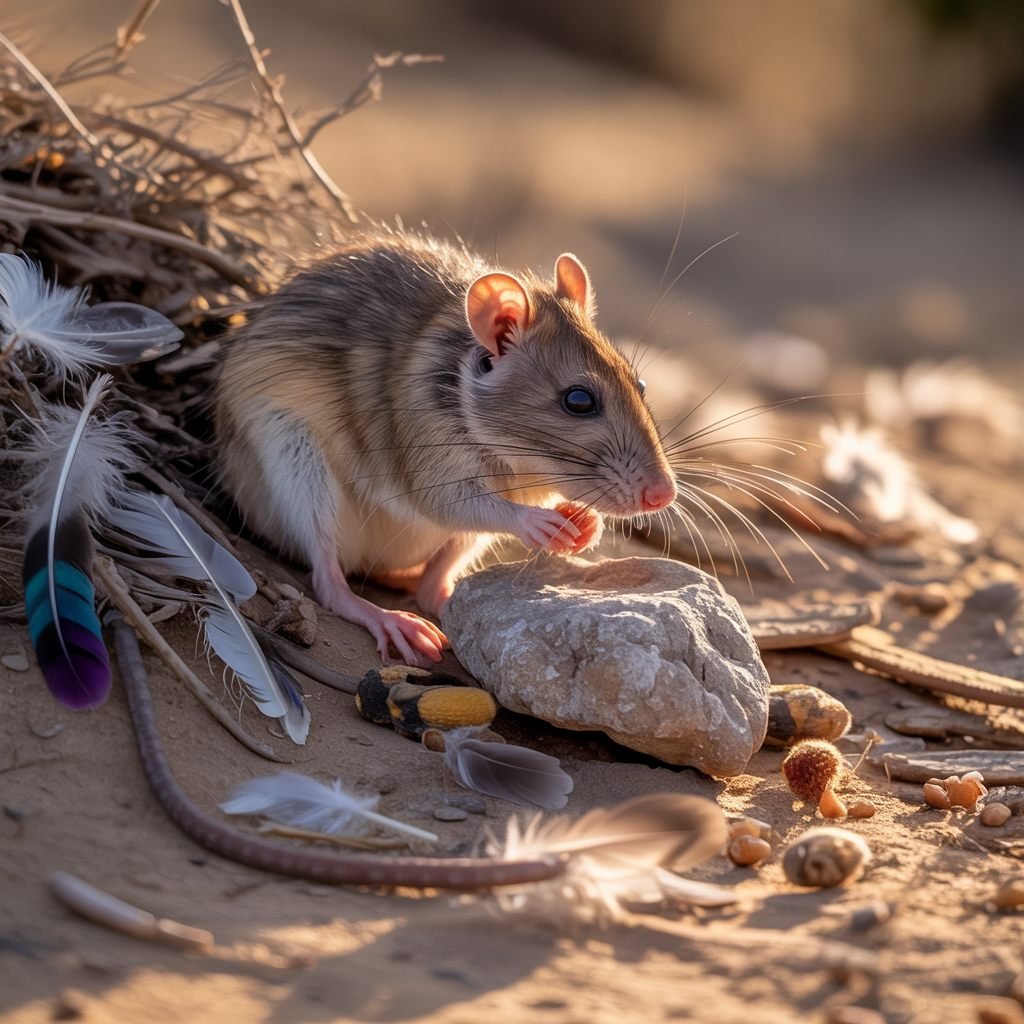
Which rodent: the principal Southwest reservoir is the deer mouse (Peromyscus maniculatus). Some native woodrats can carry related hantaviruses. The house mouse is not considered a reservoir, and neither are roof rats or Norway rats.
Where the risk concentrates: native rodents in rural, foothill and outbuilding settings — sheds, cabins, crawl spaces, well houses, stored RVs, and structures opened up only a few times a year.
How exposure happens: primarily inhaling aerosolised particles from dried urine, droppings and nesting material. Sweeping a shed floor covered in mouse droppings is the textbook scenario. It is not spread person to person.
Symptoms: one to eight weeks after exposure — fever, muscle aches particularly in thighs, hips and back, fatigue, headache, sometimes nausea. This is followed by a later phase with coughing and shortness of breath as fluid accumulates in the lungs, which can develop quickly.
The one useful sentence: if you develop fever and muscle aches within weeks of cleaning up rodent droppings, tell your doctor you disturbed a rodent nest. Early symptoms look like ordinary viral illness, and the exposure history is what prompts the right investigation.
Arenaviruses
Risk level: uncommon.
White-throated woodrats — the common pack rat around Tucson — are documented carriers of arenaviruses transmissible to humans through contact with droppings, urine and nesting material, including inhalation of disturbed dry material.
This is the primary reason midden removal is done with respiratory protection and containment. It is also why we advise against clearing a midden yourself regardless of how straightforward it looks.
Plague
Risk level: rare in Arizona, and not a house-rat issue.
Plague (Yersinia pestis) persists in wild rodent populations in the American Southwest, including parts of Arizona. Transmission is via infected fleas, and the associated hosts are wild ground squirrels, prairie dogs and chipmunks at higher elevations — not the roof rats and house mice in Tucson homes.
Practical relevance is low for urban Tucson properties. The sensible precautions are to avoid contact with sick or dead wild rodents, keep pets on flea control since cats and dogs can carry infected fleas home, and avoid disturbing burrow systems in wild areas at elevation.
Salmonellosis
Risk level: the most likely one on this page.
Rodents contaminate food and preparation surfaces with droppings and urine, transmitting salmonella and other enteric bacteria. Unglamorous, and far more common than any of the viral risks.
It is also the easiest to eliminate: all dry goods in hard sealed containers including pet food, thorough surface disinfection anywhere droppings are found, and discarding any packaging that has been breached. Mice are not selective about where they urinate, so droppings in a drawer imply contamination on the surfaces around it.
Leptospirosis
Risk level: low in a dry climate.
Spread through water or soil contaminated with infected rodent urine. It needs moisture to persist, so the Sonoran Desert is not favourable habitat for it. Where it becomes relevant here is standing water — pooling irrigation, blocked drainage, or after monsoon flooding. Dogs can be affected and a vaccine exists; worth a word with your vet if your property holds water.
Secondary pests
Rodents bring ectoparasites — fleas, mites and ticks. When a population is removed without addressing the nest material, those parasites seek new hosts, which is occasionally why a household reports bites after a rodent problem is resolved. Proper sanitation prevents it.
And the Tucson-specific one: kissing bugs breeding in pack rat middens, which for most local households is a more realistic concern than any virus on this page.
Correct cleanup — the one method
The same procedure addresses nearly all of the above.
- Ventilate the space at least 30 minutes before entering. Open it and leave.
- Wear gloves and a fitted N95. A cloth or surgical mask does not filter this.
- Spray droppings and nesting material thoroughly with disinfectant or 1:10 bleach. Soak five minutes.
- Wipe up with paper towel while still wet.
- Double-bag and dispose of outside.
- Disinfect surrounding surfaces.
- Wash hands thoroughly after removing gloves.
Never sweep. Never vacuum. Both do precisely what you are trying to prevent.
When to hand it over
Attic-scale contamination, insulation used as bedding, any pack rat midden, and any structure closed up for a season. Risk scales with the volume of material disturbed, and those jobs need containment and proper respiratory protection.
Pets and rodent-borne disease
Worth a note, since households worry about it. Dogs and cats are not usually at risk from the viral diseases above in the way people fear, but there are two genuine considerations.
Fleas. Pets can carry rodent fleas into the house, and in the rare Arizona settings where plague circulates in wild rodents, flea control on pets is the relevant precaution. Keep cats and dogs on a vet-recommended flea programme.
Secondary poisoning. The larger risk is one you control directly. A pet that catches and eats a poisoned rodent can be poisoned in turn, and anticoagulant rodenticides are a recognised cause of pet emergencies. This is one more reason we do not use interior poison, and a reason to be cautious about any company that does.
Cats hunting rodents is normal and generally low-risk provided the rodents have not been poisoned — which loops back to keeping poison off the property entirely.
That is what our decontamination service exists for. A free inspection will tell you which category you are in.
Want it confirmed properly?
A free inspection identifies the species, every entry point and the scope of work — with photographs, in writing, before anyone quotes a figure.
Explore this section

Health Risks
Most pest control sites stop at “rodents carry disease” and leave it there. That is not enough inf…
Kissing Bugs
The connection most Tucson homeowners have never heard, and the reason we treat midden removal as protective-e…
Allergies & Asthma
The most common rodent health risk and the least discussed. If someone's allergies get worse indoors and do no…