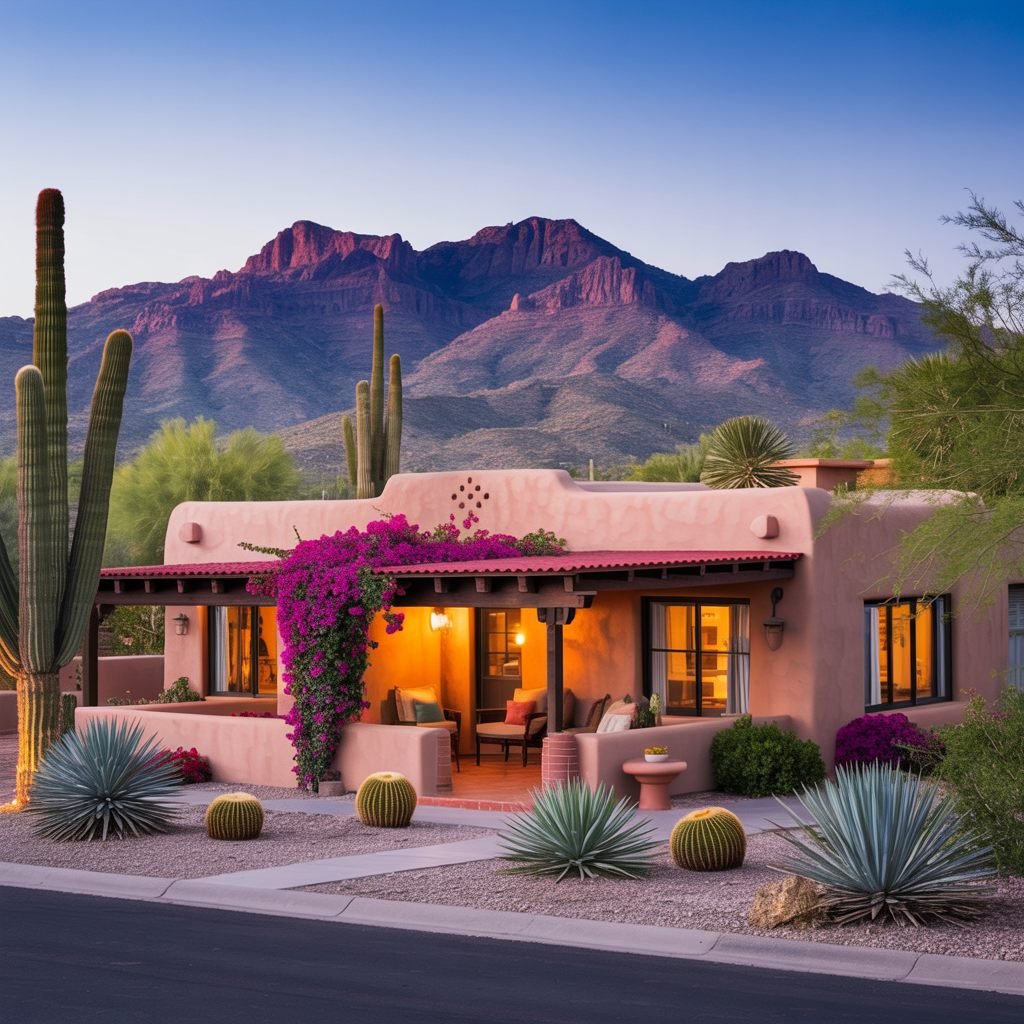
Sahuarita is one of the newest parts of the metro — master-planned subdivisions like Rancho Sahuarita, small lots, stucco-over-frame construction and young families. That housing stock genuinely matters, because a five-year-old home has far fewer of the roofline and adobe vulnerabilities that make an older Tucson house easy for rodents to enter.
But newer does not mean immune. The pressure in 85629 simply comes from different places — the yard, the garage and the wider landscape rather than the roof.
What makes 85629 different
Retention basins and drainage
Master-planned communities are built with retention basins, landscaped washes and drainage corridors threaded between the subdivisions. That vegetation and the shelter it provides is prime pack rat habitat sitting a short walk from every back wall. A basin that looks like tidy landscaping to a resident is a wildlife corridor to a rodent.
The pecan groves and the Santa Cruz
The Farmers Investment pecan groves and the Santa Cruz River corridor sit right alongside the community. Groves are a significant rodent reservoir — food, cover and irrigation moisture in one place — and properties near them see more roof rat pressure than the subdivision average, because the mature canopy supports climbing that open desert does not.
Small lots, close block walls
Lots here are compact and heavily walled. Block perimeter walls have weep holes at the base that must be screened rather than sealed, and they are a standard pack rat entry into a yard where the animal then targets the garage and any parked vehicles.
New-build garages
The single most common entry on a newer Sahuarita home is the garage — specifically the door seal. Roll-up doors settle, the rubber bottom seal wears at the corners, and the gap that opens is more than enough for a house mouse and often a rat.
What we usually find
- Mice in the garage, entering at worn door-seal corners and nesting in stored boxes
- Pack rat middens against perimeter walls, under AC condenser pads and in landscaping near basins
- Nests in vehicles parked in driveways and garages, with chewed wiring
- Roof rats on properties backing onto groves or mature community landscaping
- Unscreened weep holes in perimeter and courtyard walls
Why "the house is new, how do I have rats?"
This is the question we hear most in Sahuarita, and the answer is that rodent pressure is a landscape phenomenon, not a building-age one. A new house sits in the same desert, beside the same basins and groves, as an old one. The construction quality buys you a tighter envelope — which is real and valuable — but it does nothing about the population living in the retention basin fifty feet away.
The practical upshot is good news, though: because the envelope is tight, sealing a newer Sahuarita home is usually quick and the results hold well. The weak points are few and predictable — the garage door seal, the weep holes, a couple of utility penetrations — rather than the dozens of open tile terminations an older roof presents.
The garage is usually the whole job
On a typical newer home here, hardening the garage solves most of what people call. That means a fresh full-width door seal, screened weep holes, a check of the wall between garage and living space, and sealing the utility penetrations where plumbing and conduit enter. Add perimeter-wall weep screening and midden removal from the yard, and the property is genuinely protected rather than temporarily cleared.
See our service list for how exclusion, trapping and clean-up fit together.
Seasonality and the young-family factor
The rodent calendar in Sahuarita is the same as the rest of the metro — seal in spring, expect monsoon displacement, brace for the October indoor push — but there is a household factor worth naming. Families with children and pets have the strongest reason to avoid interior poison, and we do not use it. Trapping plus exclusion clears the problem without leaving toxic bait where a curious toddler or dog can reach it, and without the secondary-poisoning risk to the raptors that hunt the basins.
See the seasonal rodent calendar for the timing.
What it costs here
Sahuarita jobs are often at the lower end of our range precisely because the homes are tight and the entry points few. A garage-seal-plus-weep-hole exclusion on a newer home is quick work with durable results. Properties near groves with active roof rats in the attic run higher because the roofline and canopy need addressing too. See pricing.
Rancho Sahuarita and the man-made lake
The lake and the extensive landscaped water features at the centre of Rancho Sahuarita are part of what makes the community attractive — and they are also a permanent water source in a desert, which matters for rodents. In the dry months water is often the limiting factor on a rodent population, not food, so reliable water plus the shelter of dense community landscaping supports more animals than the surrounding open desert would. Homes ringing the parks, basins and greenbelts feel this most. It does not mean those homes are doomed to rodent problems; it means sealing is worth doing proactively rather than waiting, because the ambient pressure is higher than the neat streetscape suggests.
Common questions from Sahuarita homeowners
My home is only a few years old — do I really need this?
A newer home needs less work, not none. The envelope is tight, so sealing the garage door, weep holes and utility penetrations is quick — but those few gaps are exactly where the local pressure gets in. Proactive sealing on a new home is cheap insurance.
Do you use poison around kids and pets?
No. We trap and exclude. There is no interior rodenticide and nothing toxic left where a child or dog can reach it, and no secondary-poisoning risk to the hawks and owls that hunt the basins.
How fast can you come out?
Usually within a few days outside the autumn peak. If a new construction phase near you has just triggered activity, sooner is better — seal before the wave settles in.
Book a free inspection and mention whether you back onto a basin, a wash or the groves — it tells us which species to expect before we arrive.
Want it confirmed properly?
A free inspection identifies the species, every entry point and the scope of work — with photographs, in writing, before anyone quotes a figure.
Explore this section
Tucson Areas
Rodent pressure is not evenly distributed across Tucson. Housing stock, elevation, vegetation and proximity to…
Catalina Foothills
Large lots, desert washes and mature tile roofs. The Foothills get both species at once, which is why partial …

Tanque Verde
Wash corridors, acreage and outbuildings. Tanque Verde properties have more structures than the average lot, a…
Oro Valley
Newer construction against open desert. Oro Valley homes are usually well built and still get pack rats, becau…
Vail
Open desert on every side, acreage lots and a lot of stored equipment. Vail is pack rat country, and the vehic…

Sam Hughes
Mature citrus, historic construction and a canopy that connects half the neighbourhood. Sam Hughes is roof rat…