
Sam Hughes and the surrounding university area is the clearest roof rat territory in Tucson, and the reason is visible from any street in the neighbourhood: mature, connected tree canopy over historic homes.
If you are in 85716 and hearing something overhead, this is almost certainly what it is.
What makes 85716 different
The citrus canopy
Decades-old grapefruit, orange and lemon trees are part of the neighbourhood's character, and they are also close to ideal roof rat habitat. Citrus offers high water content in a desert, a long fruiting season, and dense evergreen cover from predators — all at once.
More importantly, mature canopy touching a roofline is a bridge. A roof rat crosses from tree to tile without ever touching the ground, which means ground-level traps and bait miss them entirely.
Connected canopy
The problem compounds here in a way it does not in newer neighbourhoods. Canopies connect across property lines, so a rat can travel much of a block at height. You can trim your own trees perfectly and still have a route in from next door.
Historic construction
Adobe, burnt adobe and early block bungalows, many from the 1920s to 1940s. These have vulnerabilities newer homes do not: erosion pockets at the base and around openings, viga penetrations where the seal around roof beams has shrunk and cracked with age, and original vent screening long past its service life.
Rentals and student housing
A significant share of the area is rented. Problems get reported late, deferred between tenant and landlord, and populations establish across academic years.
What we usually find
- Canopy bridges — almost always the primary route, and frequently more than one
- Hollowed fruit still hanging on the branch, rind intact — the roof rat signature
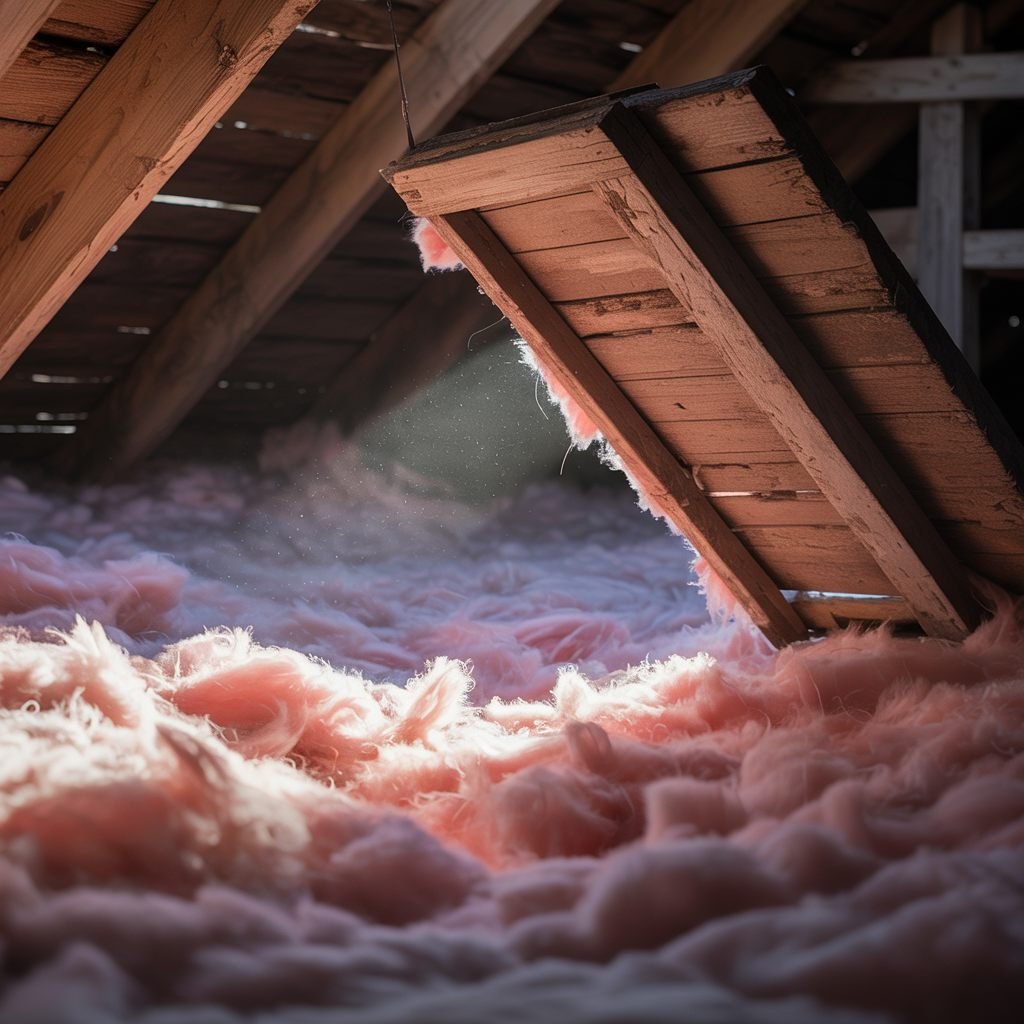
- Attic nests of shredded insulation in eave corners and soffits
- Failed original vent screens on gable and soffit vents
- Viga and beam penetrations with perished sealing
- Erosion pockets at the base of adobe walls, widened by gnawing
- Chewed duct wrap in retrofitted attic ductwork
You do not have to remove the tree
We say this on nearly every Sam Hughes inspection, because it is usually the first thing homeowners fear.
A well-maintained citrus with four feet of clearance from the roofline, fallen fruit picked up weekly and a clean trunk base is not a meaningful rodent liability. An unmaintained tree touching the fascia with fruit rotting underneath is a highway with a food court attached. The difference is maintenance, not the tree.
Check the whole chain when you trim — we regularly find properties where the citrus was cut back correctly but an adjacent palm or oleander still completes the route. See citrus trees and rodents.
Working on historic buildings
Repairs on adobe need to be compatible with the substrate. Portland-heavy cement mortar against traditional adobe is harder than the surrounding material and causes accelerated erosion at the joint — you fix a rodent hole and create a preservation problem.
We use appropriate lime-based or mud-based repair materials on traditional adobe, and we will tell you where a repair is properly a job for a restoration specialist rather than us. Full detail: rodent-proofing adobe and block homes.
For landlords and tenants
The pattern we see is deferral — a tenant reports noise, it is not urgent, the semester ends, and by the following autumn the attic insulation is contaminated and the ductwork is chewed.
For landlords, preventive exclusion between tenancies is dramatically cheaper than remediation, and it is the one window when attic access is easy. For tenants, report attic noise in writing and keep the record — the damage accumulates monthly.
Practical advice for 85716
- Four feet of clearance from roofline to any branch, checked across the whole chain
- Pick up fallen fruit weekly in season, and harvest what you will not eat
- Check original vent screens — most are well past service life
- Do the attic daylight test — torch off on a bright day shows openings directly
- Watch for a room that stops cooling, which usually means chewed duct wrap
The neighbourhood problem
Sam Hughes has a characteristic that makes it different from anywhere else we work: because the canopy is continuous across property lines, a roof rat population is effectively a block-level population rather than a house-level one.
You can seal your house perfectly, trim your own trees to a proper clearance, and still face pressure from a route that runs through three neighbouring gardens. Exclusion still works — a sealed house is a sealed house — but the pressure against it does not drop the way it would in a newer subdivision.
What helps is coordination. Where several neighbours are hearing attic activity in the same period, addressing the canopy collectively is far more effective than each household trimming its own tree in isolation. It is not always an easy conversation, but it is the one that actually changes the outcome.
Older ductwork
Many historic homes here had air conditioning retrofitted, with ductwork run through attics that were never designed for it. That ducting is frequently older, more accessible and more exposed than in purpose-built homes, and it is a common target.
If your house is pre-1960 with retrofitted attic ducting and a room that has stopped cooling properly, chewed duct wrap is a strong candidate. See signs of rodents in the attic.
Book a free inspection and we will map the canopy routes as well as the roofline openings.
Want it confirmed properly?
A free inspection identifies the species, every entry point and the scope of work — with photographs, in writing, before anyone quotes a figure.
Explore this section

Tucson Areas
Rodent pressure is not evenly distributed across Tucson. Housing stock, elevation, vegetation and proximity to…

Catalina Foothills
Large lots, desert washes and mature tile roofs. The Foothills get both species at once, which is why partial …

Tanque Verde
Wash corridors, acreage and outbuildings. Tanque Verde properties have more structures than the average lot, a…
Oro Valley
Newer construction against open desert. Oro Valley homes are usually well built and still get pack rats, becau…
Vail
Open desert on every side, acreage lots and a lot of stored equipment. Vail is pack rat country, and the vehic…
East Tucson
The broadest mix in the metro — 1960s block, 1980s tile and newer infill, all in one area. Which problem you h…