These are the questions that come up on almost every inspection. Where the honest answer is "it depends," we have said what it depends on.
Identifying the problem
How do I know which rodent I have?
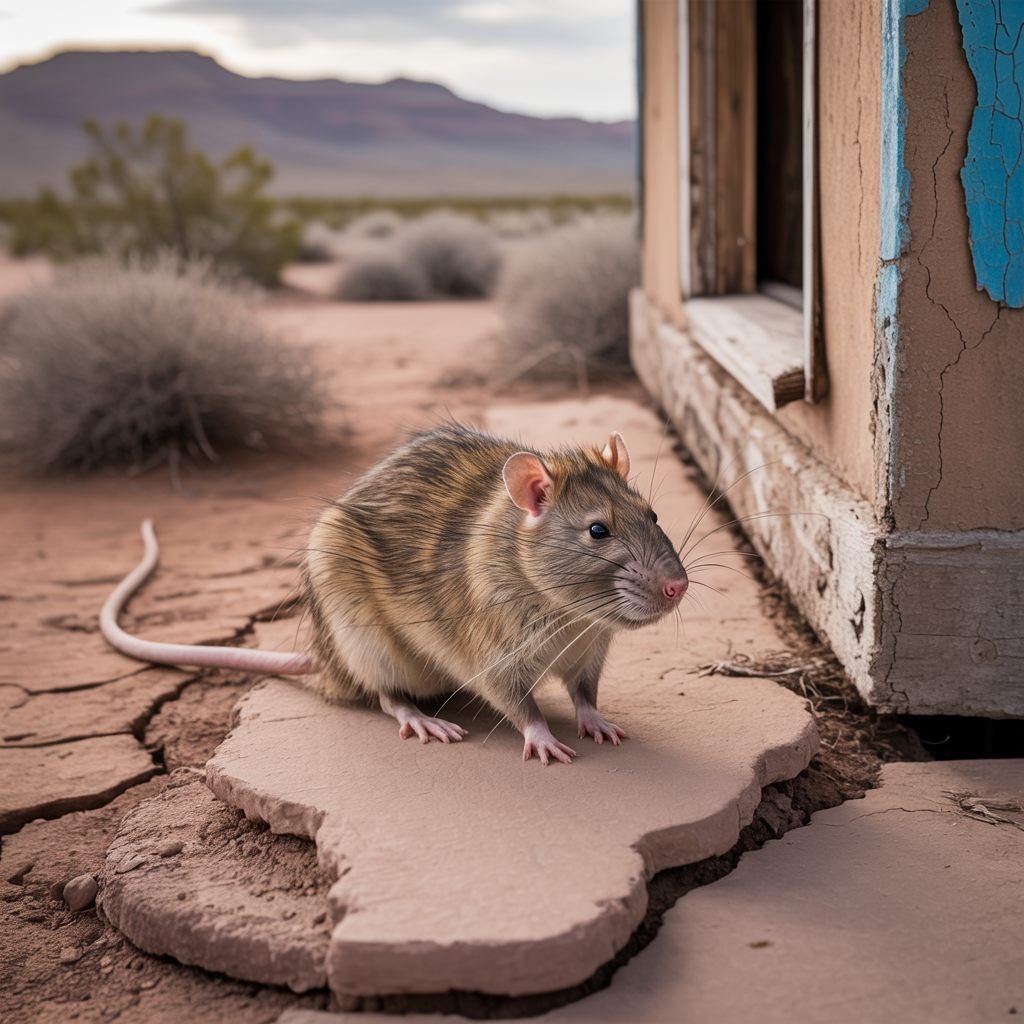
Start with the tail if you have seen the animal — furry means pack rat, bare and scaly means roof rat, small means house mouse. If not, the nest is decisive: a messy pile of sticks and cactus outdoors is a midden; a compact ball of shredded insulation in an attic is a roof rat. Full comparison here.
What does the noise in my attic mean?
Overhead, between dusk and around 2 a.m., usually roof rats. Dragging or rolling sounds mean nesting material is being moved — a nest under construction rather than a passing visit.
Why does one room suddenly not cool?
Very often chewed attic duct wrap or a breached flex duct dumping cooled air into a superheated attic. If you have also heard attic noise, treat them as the same problem. See signs in the attic.
Timing and process
How long does an inspection take?
45 to 90 minutes for a typical single-family home. Longer for large properties with casitas, outbuildings or extensive block walls. You get photographs of everything found and a written scope before any work begins.
How long until the problem is gone?
Exclusion is usually one to two days. Trapping runs one to three weeks of daily checks for an established population; often days for a single mouse. Anyone promising same-day resolution on an established population is describing a visit, not an outcome.
When is the best time of year?
April to June for preventive work — populations are at their annual low, you are sealing ahead of monsoon displacement and the autumn wave, and attics are still workable. If you already have activity, act now regardless of season.
How fast can they come back?
If entry points are properly sealed, re-infestation risk drops sharply. Most repeat problems happen because trapping was done without exclusion — the door was never actually closed. In an active Tucson neighbourhood, an unsealed home can be reoccupied within weeks.
Cost
How much does it cost?
Inspections are free; full exclusion and treatment plans generally run $700–$2,500 (partial exclusion from around $250) depending on entry point count, decontamination needs and property size. See pricing for the seven factors that move it.
Why will you not quote over the phone?
Entry point count is the main cost driver and it cannot be assessed by telephone. A firm phone quote is either a partial scope that will need extending, or padded to cover the unknown.
Do you require a contract?
No. Not for residential work, ever. Commercial properties are different — continuous pressure and inspection documentation make scheduled service genuinely appropriate there.
Methods and safety
Is rodent control humane?
It can be, and we will be honest about where. Live capture and release genuinely works for pack rats — native wildlife — and for single-animal situations. It works poorly for established roof rat and mouse populations, and we will say so rather than sell you a comfortable label. See humane rodent control.
Do you use poison?
Not inside homes. The animal dies somewhere unreachable and you trade a noise problem for a weeks-long odour problem, plus secondary poisoning risk to owls, hawks, bobcats and pets. Exterior bait stations have a role in some commercial settings.
Do you use glue boards?
No. Inhumane, largely ineffective against rats, and in southern Arizona they routinely catch lizards, snakes and birds.
Is it safe for children and pets?
Yes — that is part of why we avoid interior poison. Traps are placed in inaccessible locations, inside cabinets, behind appliances or in the attic. We will walk you through placement before we leave.
Health
Is it safe to clean up droppings myself?
For small amounts, yes, with the right method: ventilate 30 minutes, wear gloves and a fitted N95, mist with disinfectant, wait five minutes, wipe with paper towel, double-bag. Never sweep or vacuum — both aerosolise particles.
Should I worry about hantavirus?
It is rare but serious. The principal Southwest reservoir is the deer mouse in rural and outbuilding settings — the house mouse in your pantry is not considered a reservoir. The useful action: if you develop fever and muscle aches within weeks of cleaning up droppings, tell your doctor you disturbed a rodent nest. See diseases in Arizona.
What is the kissing bug connection?
Kissing bugs breed in pack rat middens. A midden against your house lets them come indoors and bite at night. For most people the bite is minor; in sensitised individuals reactions can escalate. See kissing bugs and pack rats.
DIY
Can I just handle this myself?
Sometimes, and we will tell you when. A single early mouse, all yard habitat work, irrigation repair, garage door seals and food storage are genuinely DIY. See the honest comparison.
Do ultrasonic repellers work?
Not reliably. Ultrasound does not pass through walls, attenuates fast, is blocked by insulation and clutter, and rodents habituate to it. See the full answer.
Should I seal my weep holes?
No — screen them. Weep holes let wall assemblies drain and breathe. Blocking them traps moisture and causes spalling, efflorescence and interior damp. Use stainless or copper covers.
Still have a question?
Get in touch and ask it, or book a free inspection.
Want it confirmed properly?
A free inspection identifies the species, every entry point and the scope of work — with photographs, in writing, before anyone quotes a figure.