A lot of pest control companies advertise "humane" as a marketing word without saying what it means. We would rather set out what is genuinely achievable, where it works, and where it does not.
The most humane thing is exclusion
This is the point that gets lost. The measure that reduces animal suffering most is not the trap type — it is preventing the situation from recurring at all.
A property that is sealed properly stops drawing successive generations of animals into a structure where they will inevitably be killed or removed. A property that is trapped repeatedly without sealing kills far more animals over ten years than one that is excluded once.
If animal welfare matters to you, exclusion is the service to spend money on. Everything below is secondary to it.
Where live capture and release genuinely works
Pack rats
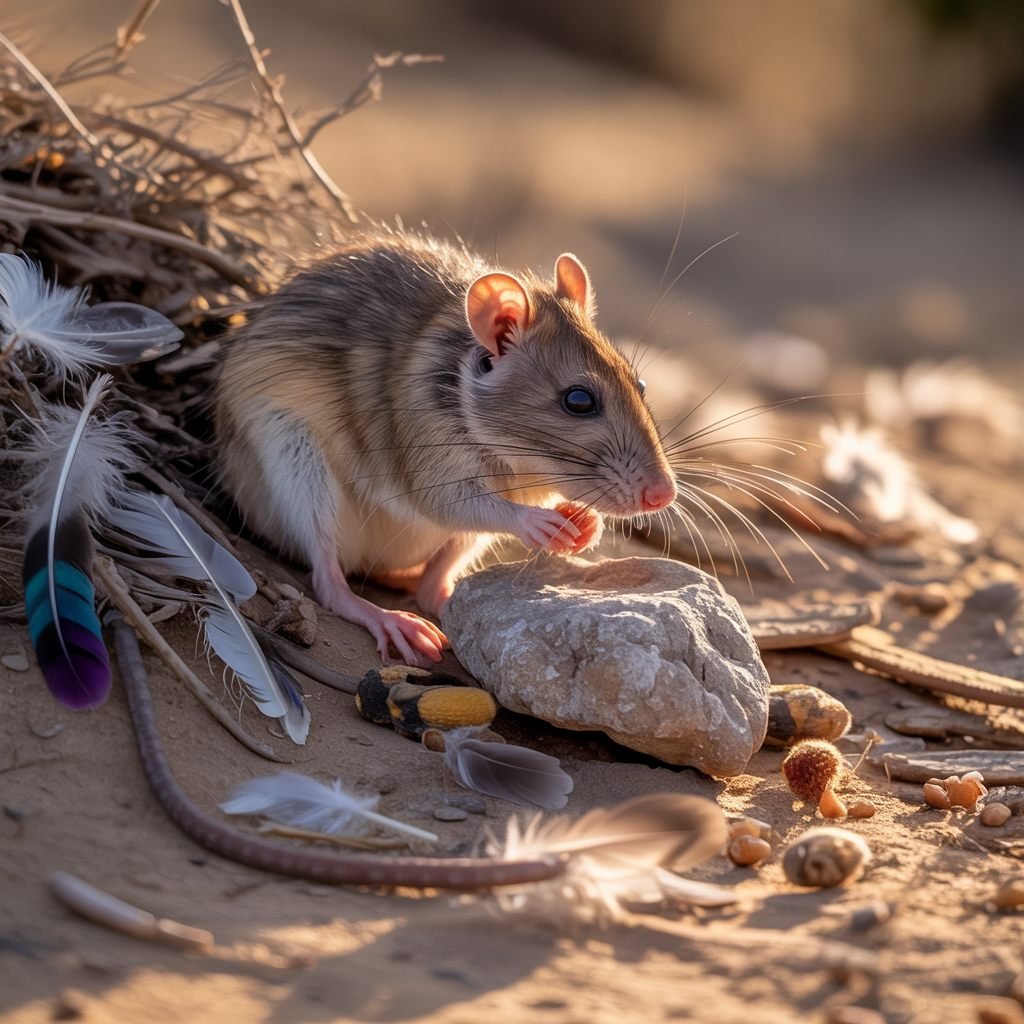
This is the strongest case. Pack rats are native Sonoran Desert wildlife behaving normally. They are not an introduced commensal pest, and relocating one to suitable habitat away from structures is a legitimate outcome rather than a gesture.
It works best when the animal count is low, the midden is being removed anyway, and there is appropriate release habitat at a sensible distance.
Kangaroo rats
Rarely need any intervention at all. Kangaroo rats are native, do not damage structures, and where they are a nuisance the answer is habitat management rather than removal.
Single-animal situations
One animal that has got into a garage or living space and cannot find its way out. Live capture and release outside is straightforward and obviously correct.
One-way exclusion devices
The most underrated humane tool. A device fitted at the main entry lets animals leave and not return. No trap, no handling, no killing — the population simply exits over a few nights and the opening is then sealed. We use these routinely as part of exclusion work where the structure allows it.
Where it works poorly — the honest part
Established roof rat populations
Roof rats are an introduced species with high reproductive rates. Live-trapping an established attic colony one animal at a time rarely outpaces breeding, and relocating an introduced species simply moves the problem to someone else's property or into habitat where it competes with natives.
House mice
Same reasoning, plus the numbers. House mice breed year-round in a heated structure, and released mice have poor survival prospects away from human structures — which means "release" is often a comfortable label rather than a good outcome for the animal.
Relocation generally
Relocated animals face established territories, unfamiliar predator pressure and no known food or water sources. Survival rates are not what people picture. Release distance and habitat quality matter enormously, and there are legal considerations for some species.
We will not tell you we are releasing animals into a happy new life when the realistic outcome is different. If live capture is not the right answer for your situation, we will say so and explain why.
What we never use, on welfare grounds
Glue boards. The animal is immobilised and dies slowly of stress, dehydration or exhaustion. They are also largely ineffective against rats and routinely catch lizards, snakes and birds in southern Arizona. We do not use them under any circumstances.
Interior anticoagulant poison. Death takes days and is not painless. It also moves up the food chain — Tucson's owls, hawks, bobcats and coyotes, plus household pets, are all at secondary risk. And practically, the animal dies somewhere unreachable and you get a weeks-long odour problem.
Where lethal control is the right answer, a properly sized, correctly placed snap trap is the fastest and least cruel option available. We would rather use that honestly than use something slower and call it humane.
Protecting non-target wildlife
This is part of humane practice and rarely discussed. Our methods are chosen partly to avoid harming the animals that are actually helping you — owls and hawks are effective natural rodent control and are the primary victims of secondary poisoning.
Encouraging them is worth doing: avoid rodenticides on the property entirely, and consider an owl box if you have the space. A resident barn owl pair takes a meaningful number of rodents a year at no cost to you.
What to ask any company
If humane treatment matters to you, ask directly: do you use glue boards? Do you use interior poison? Do you use one-way exclusion devices? What happens to captured animals? A company that cannot answer those clearly is telling you something.
How one-way devices actually work
Since this is the humane tool we rely on most, it is worth explaining properly.
Once the entry points are identified, all but the primary one are sealed. A one-way device is fitted over the remaining opening — a funnel or flap that allows an animal to push out but not back in. Over the following nights the resident population leaves to forage as normal and cannot return. The device is then removed and the final opening sealed.
Nothing is trapped, nothing is handled, nothing is killed, and no animal is relocated into unfamiliar territory. It is genuinely the best outcome available for both parties.
The limits are real, though. It requires that the entry points can all be identified and that one is suitable for fitting a device. It is unsuitable during breeding season if dependent young may be inside, because you would separate a mother from a litter and create both a welfare problem and a dead-animal problem. We check for that before fitting anything.
Timing around breeding
Any exclusion carries this consideration. Sealing a structure that contains dependent young leaves them to die inside the wall or attic — inhumane, and it produces exactly the odour problem we work to avoid.
Where there are signs of an active nest with young, we time the work around it or remove the nest directly rather than sealing over it. This occasionally means a short delay, and we would rather explain that than take the fast route.
Common questions
What makes rodent control "humane"?
It means minimising suffering and avoiding poison, which kills slowly and moves up the food chain to predators and pets. Our approach — quick-kill trapping where removal is needed, live handling of native woodrats where appropriate, and exclusion to keep them out — is both humane and effective.
Do you relocate the rodents?
Where live capture genuinely suits the situation, native woodrats can sometimes be handled that way. But relocation is often less humane than it sounds — a displaced animal rarely survives in unfamiliar territory — so we are honest about when it helps and when it does not.
Is humane control as effective?
Yes. Effectiveness comes from sealing the entry points, not from poison. A humane, exclusion-first approach clears the problem and keeps it out without the downsides.
Ask us the same questions during a free inspection. You will get direct answers and, where live capture is not appropriate, an honest explanation rather than a comfortable one.
Want it confirmed properly?
A free inspection identifies the species, every entry point and the scope of work — with photographs, in writing, before anyone quotes a figure.
Explore this section

Services
Six services, one principle: seal the building first, then clear what is inside. Everything we do is built aro…

Rodent Exclusion
The only service on this site that actually ends the problem rather than managing it. Everything else is clean…
Trapping & Removal
Trapping is the cleanup, not the cure. Done properly it clears a population in days; done the usual way it run…

Commercial
Same core process, scaled up — with the documentation a health inspector will actually ask for and a service s…

Prevention
The cheapest rodent work you will ever buy, because you are paying for sealing alone — not sealing plus remova…
Attic Cleanup
The work that should not be done unprotected. Contaminated insulation cannot be cleaned — it has to come out, …