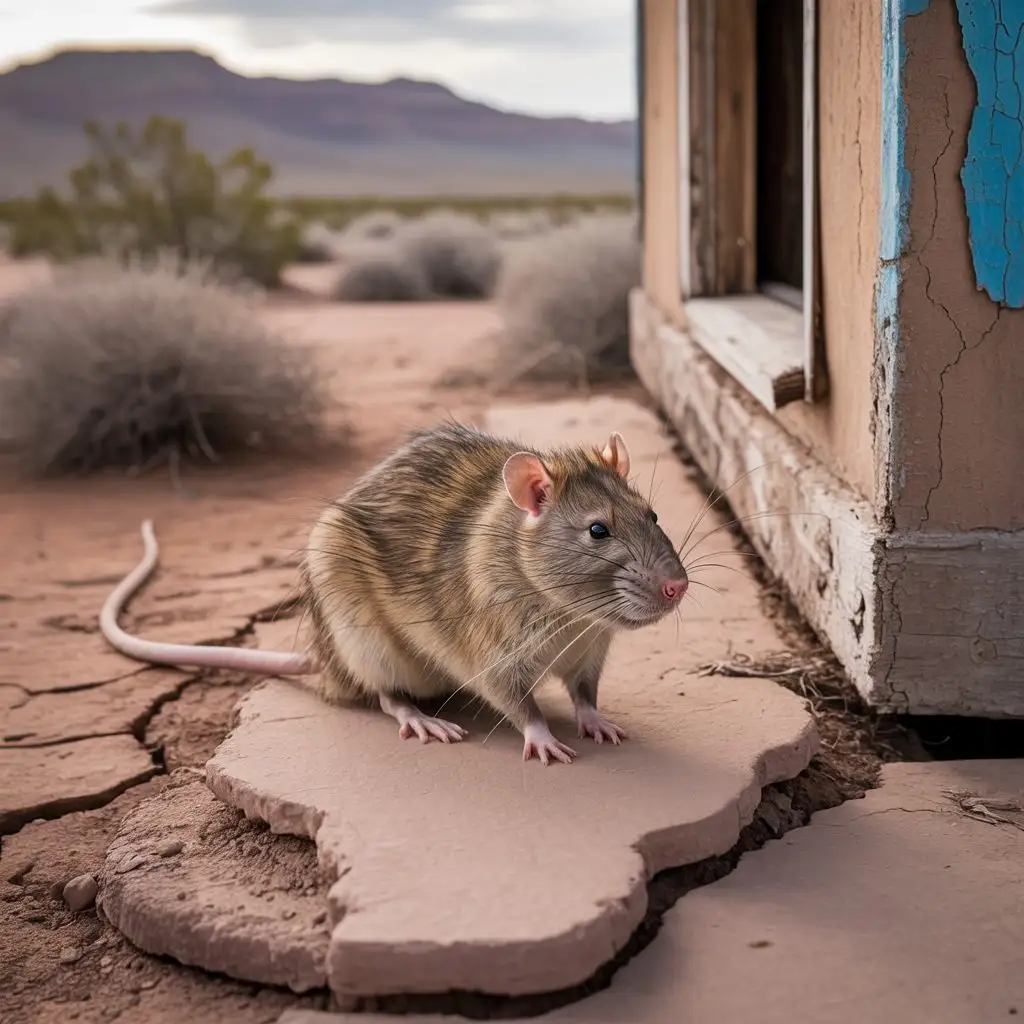
A mouse is a mouse, until you find droppings in the garage and need to know how carefully to clean them up. In Arizona the difference between a house mouse and a deer mouse (or its close relatives such as the cactus mouse) matters, because deer mice are the main carriers of the hantavirus that causes hantavirus pulmonary syndrome.
How to tell them apart
| Trait | Deer mouse | House mouse |
|---|---|---|
| Colour | Brown or grey-brown back, sharply white belly and feet | Even grey-brown all over, belly only slightly paler |
| Tail | Covered in short hair, dark on top and white underneath | Nearly hairless and scaly |
| Eyes and ears | Large, prominent eyes and big ears | Smaller eyes, smaller ears |
| Smell | Little odour | Distinct musky smell where they nest |
| Where | Sheds, garages, cabins, RVs, desert edges | Inside homes year-round: kitchens, walls, garages |
The fastest check is the belly and feet. A crisp white underside and white feet, with a two-toned tail, means a deer mouse or one of its relatives. A uniformly dull grey-brown mouse with a bare tail is a house mouse.
Why it matters: hantavirus
Hantavirus infections are rare, but they are serious, and in the Southwest the deer mouse is the main carrier. The virus is shed in droppings, urine and saliva. People are usually exposed by breathing in dust from a contaminated space, such as when sweeping out a shed, opening a closed-up cabin or cleaning a garage that has been shut for months.
House mice are not the main carrier, but you should not treat any rodent droppings casually. Use the same safe method for all of them. Our guide to hantavirus in Arizona covers symptoms and when to see a doctor.
The safe cleanup method
- Air the space out first. Open doors and windows for at least 30 minutes before you start.
- Do not sweep or vacuum droppings. That puts particles in the air.
- Soak, then wait. Spray droppings and nesting material with a bleach solution (1 part bleach to 10 parts water) or a disinfectant, and let it sit for about 5 minutes.
- Wipe up with paper towels while wearing rubber gloves, bag everything, then disinfect the area again.
- Wash your gloved hands, then your bare hands, thoroughly.
For attics, crawlspaces or anywhere with heavy contamination, professional attic cleanup is the safer choice.
Keeping both out
Both species fit through gaps about the width of a pencil. Garage door corners, gaps under doors, utility penetrations and openings around pipes under sinks are the usual entry points. Sealing those matters far more than any trap or repellent. See house mouse control or our guide to getting rid of mice.
Common questions
Do deer mice live in Tucson?
Yes. Deer mice and close relatives such as the cactus mouse live across southern Arizona, especially at desert edges and in rural or semi-rural areas, and they move into sheds, garages and vehicles.
Can house mice carry hantavirus?
House mice are not the main carrier of the hantavirus found in the Southwest. Even so, any rodent droppings should be cleaned up with the wet, no-sweeping method.
How do I know if droppings came from a deer mouse?
You cannot tell reliably from droppings alone, which is why every cleanup should follow the safe method. Seeing the animal itself, with its white belly and two-toned tail, is the reliable way to tell.
Still not sure which rodent it is?
Our rodent control in Tucson starts with identifying the species, because the fix depends on it. See what rodent control costs in Tucson for real price ranges, or book a free inspection: species, every entry point and the scope in writing before anyone quotes you a number.