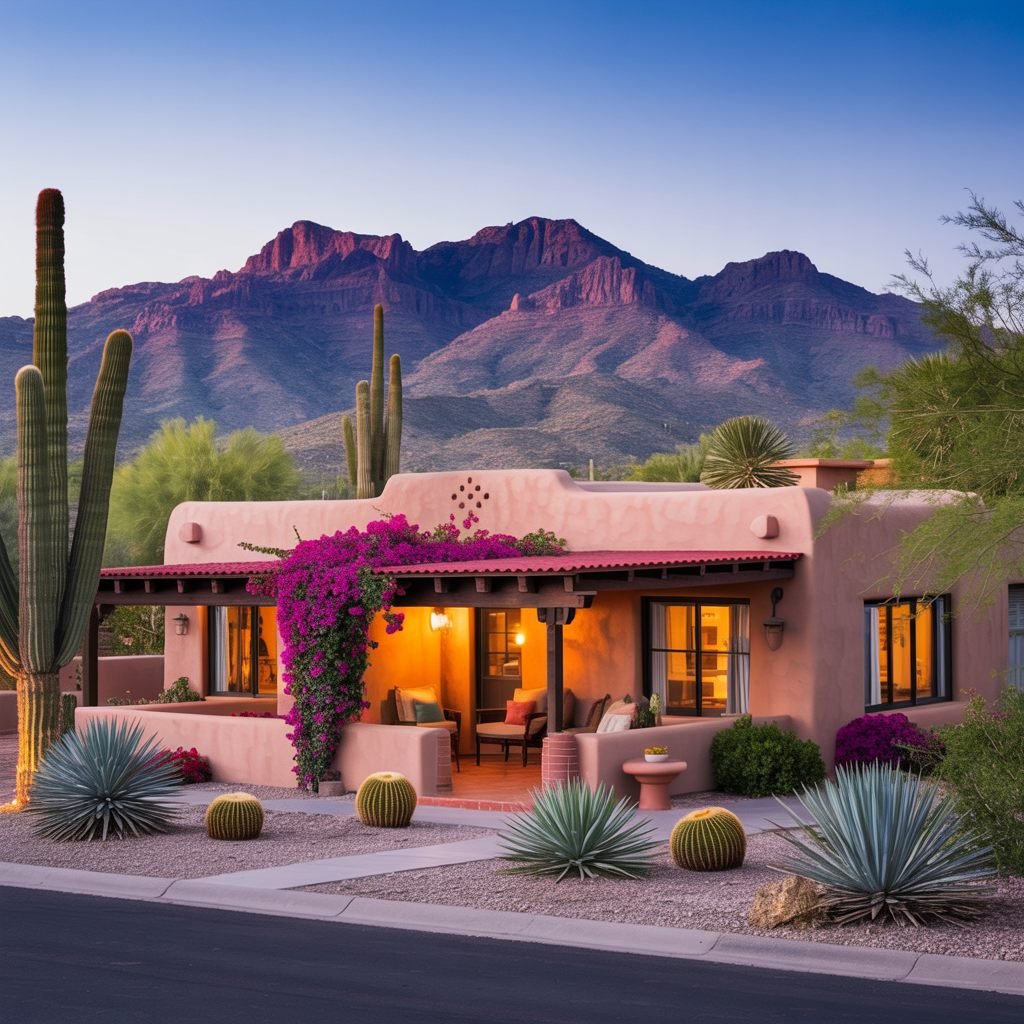
East Tucson covers a wide stretch of the metro with the most varied housing stock we work across — mid-century block ranch homes, 1980s tile-roofed subdivisions, and newer infill, often within a few streets of each other.
That variety matters, because which rodent problem you have here depends substantially on when your house was built and how mature the landscaping around it is.
What makes East Tucson different
Mixed construction eras
A 1960s flat-roofed block ranch has entirely different vulnerabilities from a 1985 tile-roofed home two streets away. Older homes here typically have failing original vent screens, degraded weep hole detailing and perished penetration seals. Newer ones have intact terminations but the same garage door and AC line set weaknesses as anywhere.
Established landscaping
Much of the area has forty-plus years of tree growth. Mature citrus, palms and shade trees mean canopy bridges to rooflines — which is why roof rats are the dominant attic species here despite the area being newer than Sam Hughes.
Flat and low-slope roofs
More common in East Tucson than in the Foothills. These have a different vulnerability profile from tile — parapet and scupper details, roof-to-wall junctions, and rooftop equipment curbs rather than tile terminations.
Attached garages everywhere
The most reliable house mouse entry in the whole metro is a worn garage door bottom seal and the corner gaps at each end. East Tucson has a great many of them, and they wear out on a predictable schedule.
What we usually find
- Worn garage door seals and corner gaps — the single most common finding in the area
- Canopy bridges from mature citrus, palm or shade trees to the roofline
- Failed vent screens on gable and soffit vents in older homes
- Palm frond skirts — old accumulations that are effectively purpose-built habitat
- AC line set penetrations with degraded original foam
- Chewed attic duct wrap, presenting as one room that will not cool
- Mice moving garage-to-house through the connecting door and shared wall penetrations
The garage route, in detail
Because it is so consistently the issue here, it is worth spelling out the sequence.
Mice enter the garage under a worn bottom seal or through the corner gaps where the seal no longer meets the jamb. The garage then provides everything they need — shelter, often pet food or birdseed in a bag, and frequently a water source from a hose bib or water heater drip pan.
From there they move into the house through the connecting door if the sweep is missing, or through shared wall penetrations for plumbing and electrical. By the time droppings appear in the kitchen, the garage has usually been occupied for a while.
The fix is unglamorous and effective: replace the bottom seal, address both corner gaps, fit a proper sweep on the garage-to-house door, seal the wall penetrations with copper mesh and patch, and move pet food and birdseed into hard sealed containers.
The room that will not cool
This is the East Tucson symptom worth flagging, because it is so often misdiagnosed.
Attic duct runs are wrapped in insulation. Rodents chew that wrap and sometimes the flex duct itself, dumping cooled air into an attic that may be well over 140°F. One room lags behind the rest of the house, an HVAC company is called, and a duct fault is correctly found — without necessarily identifying what caused it.
If you have a room that stopped cooling and you have heard attic noise, treat them as the same problem. See signs of rodents in the attic.
Practical advice for East Tucson
- Check the garage door seal annually — it is the cheapest and highest-return item on this page
- Four feet of clearance from roofline to any branch, checked across the whole chain of trees
- Have palm skirts removed and keep them clear
- Store pet food and birdseed in hard sealed containers, not bags
- Do the attic daylight test on a bright day with the torch off
- Check original vent screens if your home predates about 1980
Work out your construction era first
Because East Tucson spans so many building periods, the single most useful thing you can establish before anyone inspects is roughly when your house was built. It changes where to look first.
- Pre-1970 block ranch. Check original vent screens, weep hole detailing and door thresholds where the building has settled. Flat and low-slope roofs need parapet and scupper details checked rather than tile terminations.
- 1975–1995 tile. Eave and rake bird stops, ridge and hip closures. Mortar closures from this era have had decades of thermal cycling and frequently have cracked out.
- Post-2000. Terminations are usually intact; the failures are garage door seals, AC line sets and anything penetrating the roof that was added after construction.
Palms specifically
East Tucson has a lot of mature fan palms, and the old frond skirt is one of the best pieces of rodent habitat available anywhere on a residential lot — sheltered, insulated, predator-proof and directly connected to the trunk.
Having skirts removed and kept clear is a straightforward landscaping job with a genuinely large effect. If a skirted palm also reaches the roofline, it is both habitat and route in one plant, and it should be near the top of your list.
Book a free inspection and we will start with the construction era, because that tells us where to look first.
Want it confirmed properly?
A free inspection identifies the species, every entry point and the scope of work — with photographs, in writing, before anyone quotes a figure.
Explore this section
Tucson Areas
Rodent pressure is not evenly distributed across Tucson. Housing stock, elevation, vegetation and proximity to…
Catalina Foothills
Large lots, desert washes and mature tile roofs. The Foothills get both species at once, which is why partial …

Tanque Verde
Wash corridors, acreage and outbuildings. Tanque Verde properties have more structures than the average lot, a…
Oro Valley
Newer construction against open desert. Oro Valley homes are usually well built and still get pack rats, becau…
Vail
Open desert on every side, acreage lots and a lot of stored equipment. Vail is pack rat country, and the vehic…
Sam Hughes
Mature citrus, historic construction and a canopy that connects half the neighbourhood. Sam Hughes is roof rat…