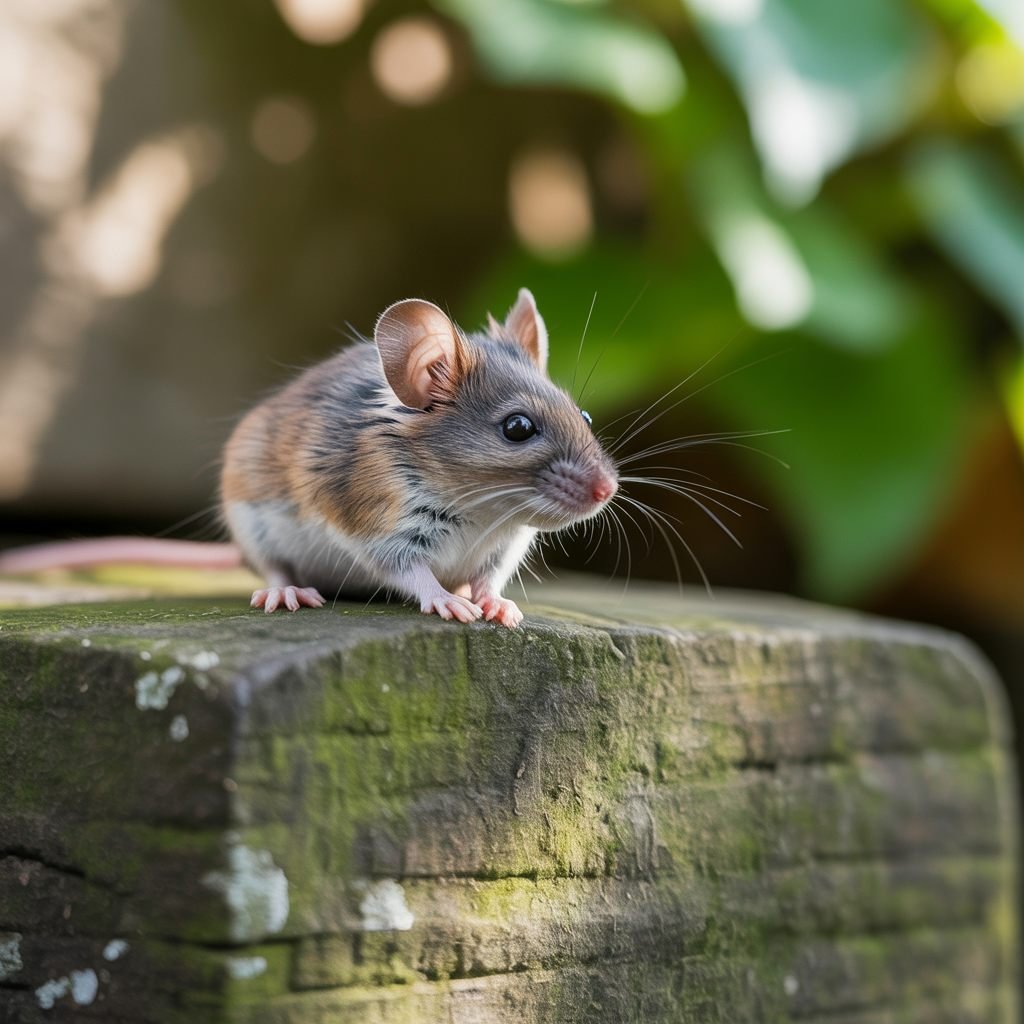
Rodent-resistant landscaping is not about removing plants. It is about denying three things: continuous cover, easy water, and structural routes to the roof. You can have a genuinely attractive Sonoran garden that scores badly on all three from a rodent's point of view.
The three principles
Break up cover. Rodents avoid open ground because of owls, hawks, coyotes and bobcats. Continuous dense planting lets them cross a property without ever being exposed. Gaps between planting masses do real work.
Control water. The desert's limiting resource is water, and irrigation systems supply it reliably. Leaks and pooling concentrate rodent traffic more than food does.
Cut the routes. Anything that bridges to the roof is a roof rat highway. This is the highest-value item on the list.
Plants that cause problems
Not "never plant these" — plant them thoughtfully and maintain them.
- Citrus. Water-rich fruit, long season, dense evergreen cover. Keep four feet of clearance from structures and pick up fallen fruit.
- Fan palms. The old frond skirt is close to purpose-built rodent habitat. Have it removed and keep it clear.
- Oleander. Dense, evergreen, usually planted as a continuous hedge against a wall. Excellent cover. Thin it and lift the base.
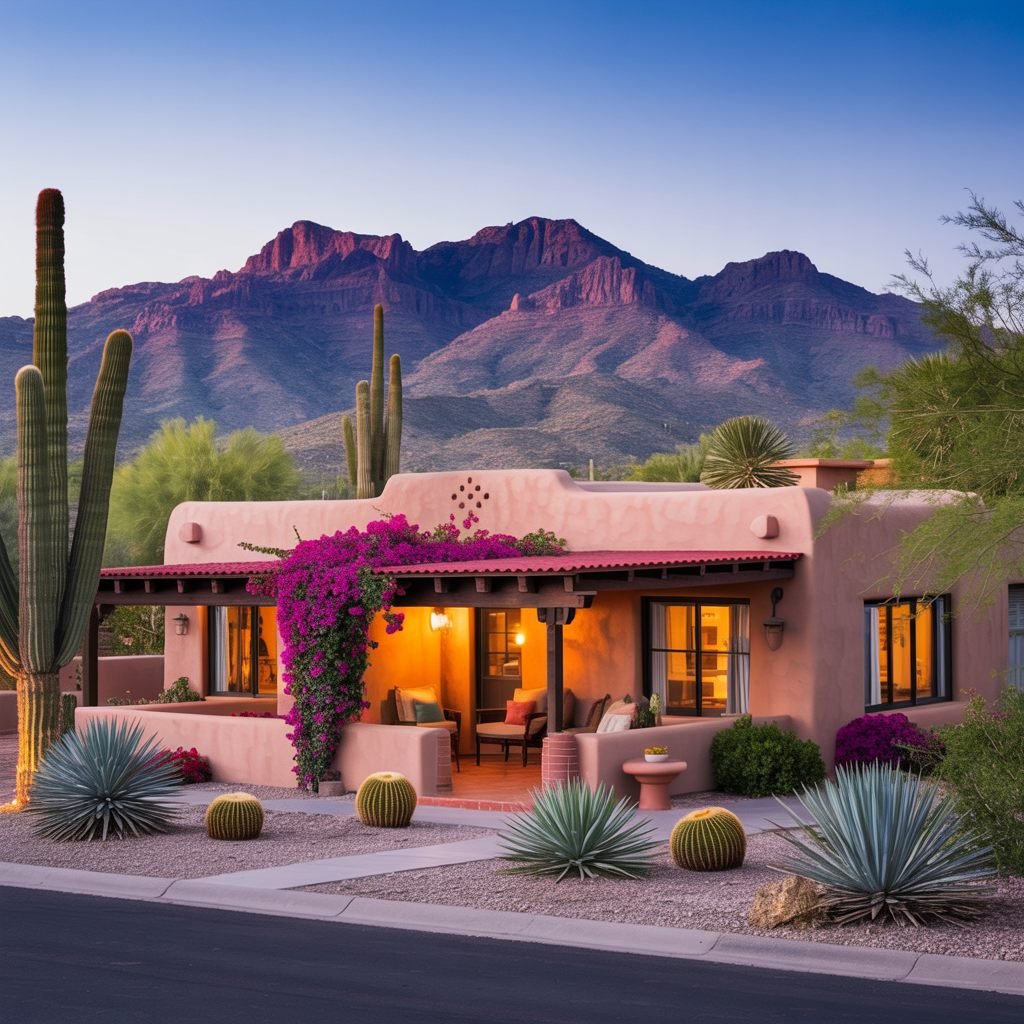
- Bougainvillea. Dense thorny mass that is protected from predators and awkward to inspect.
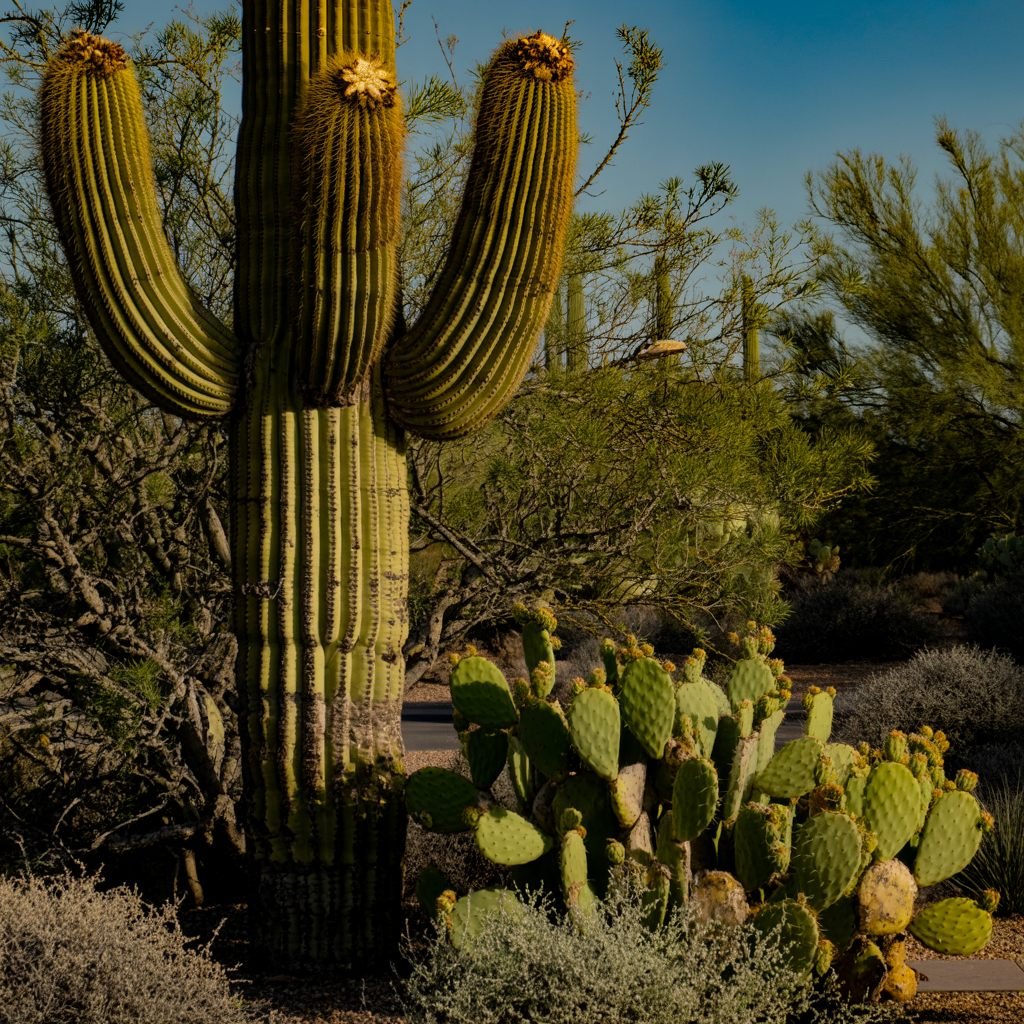
- Prickly pear and cholla. Classic pack rat midden sites — the spines are protection for the nest. Beautiful plants; keep them away from the house.
- Mesquite and palo verde. Seed pods are a food source and low branches provide cover. Lift the canopy and rake pods.
Lower-risk choices
Plants with open structure, no significant fruit and no dense skirt:
- Agave and aloe — open rosettes with nowhere to hide
- Ocotillo — vertical and open
- Barrel cactus — solid, no nesting cavity
- Desert marigold, penstemon, brittlebush — low and open
- Red yucca — clumping but not dense at the base
- Ornamental grasses, if divided regularly rather than left to form thick clumps
Hardscape decisions
Gravel over organic mulch near the house. Organic mulch holds moisture, hosts insects and can be nested in. Decomposed granite or gravel does none of that.
Keep a clear strip — 18 to 24 inches of open gravel against the foundation. It exposes anything crossing to the wall and makes your own inspection dramatically easier.
Raise woodpiles at least 18 inches off the ground and site them well away from the house. A woodpile on the ground against a wall is, functionally, a midden waiting to happen.
Watch decorative rock features. Stacked boulders and dry-stack walls create exactly the cavity structure pack rats look for. Attractive, but site them away from the house.
Irrigation
This is where most properties lose points, and it is invisible until you look.
- Walk the drip lines with the system running and look for leaks, blown emitters and pooling
- Water deeply and infrequently rather than lightly and often — less standing surface water
- Water early morning so surfaces dry before the nocturnal activity window
- Fix hose bib drips
- Check the AC condensate line, which in summer produces a steady reliable drip that rodents find quickly
Maintenance beats plant selection
If there is one conclusion here, it is this: a well-maintained garden of "problem" plants is far lower risk than a neglected garden of "safe" ones. Clearance, thinning, debris removal and irrigation repair do more than any planting list.
Twice a year, walk the property specifically looking for what has grown into contact with the house. Things bridge slowly, and nobody notices the year the branch finally reached the fascia.
Not sure what you are dealing with?
A free inspection identifies the species, every entry point and the scope of work — in writing, before anyone quotes you a number.