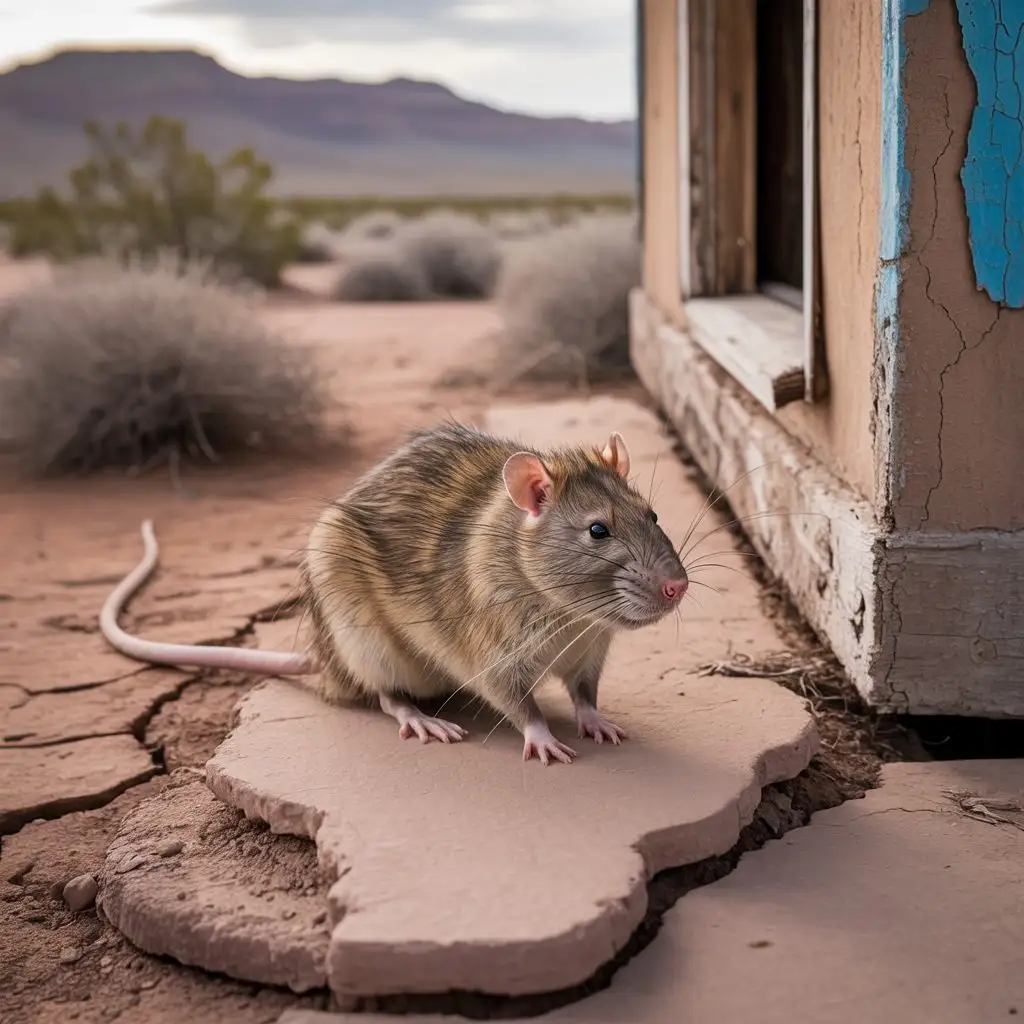
Before it is a pest, the pack rat is a genuine and rather remarkable Sonoran Desert native. Understanding the animal — properly called the woodrat — makes it easier to control, and separates the real facts from the folklore. Here is what actually makes a pack rat tick.
What a pack rat actually is
The pack rat is a Neotoma woodrat, a native rodent quite distinct from the introduced Norway and roof rats of city sewers and ships. It has large eyes, prominent ears and, in most local species, a furred rather than scaly tail — it looks more like an oversized mouse than a sewer rat. It is a true desert animal, adapted to survive here long before the city existed. See our pack rat guide.
The famous middens
The pack rat’s defining behaviour is building a midden — a fortified nest of sticks, cactus, gravel and any debris it can carry. Middens are built against cover and reused and expanded over generations. Remarkably, pack rat middens are so durable and well-preserved in the dry desert that scientists study ancient ones, some tens of thousands of years old, to reconstruct past climates and vegetation. The animal in your yard is doing what its species has done here for a very long time.
The “trading” habit
Pack rats earn their name and their “trade rat” nickname from a curious habit: they carry objects back to the midden, and if they find something more interesting on the way — a shiny bit of metal, a coin, a piece of foil — they may drop what they are carrying and take the new item instead, appearing to “trade.” It is not deliberate bartering, just a strong attraction to collectable objects, but it is why people find odd shiny things in middens.
How they live
- Nocturnal — active at night, resting in the midden by day.
- Herbivorous — eating cactus, seeds, fruit and desert plants, getting much of their water from succulent vegetation.
- Territorial and site-loyal — which is why a cleared midden site attracts a replacement unless the scent is removed and the area sealed.
- Prey for owls, hawks, bobcats and coyotes — the natural controls that poison destroys.
Native, but still a nuisance
None of this changes the fact that a pack rat in your engine bay, attic or garage is a real problem — chewed wiring, contamination, and middens that harbour kissing bugs. Respecting the animal and controlling it are not in conflict: we clear and exclude without poison, which protects the desert food chain the woodrat belongs to while keeping it out of your house. See are pack rats dangerous.
Quick answers
Is a pack rat the same as a sewer rat?
No — it is a native woodrat, a different animal from the introduced Norway and roof rats. It is a desert native, not a city sewer rat.
Do pack rats really steal shiny things?
They are strongly attracted to collectable objects and may drop one item for another on the way to the midden, which looks like trading. Shiny things do turn up in middens.
Are they protected?
They are common native animals, and control focuses on exclusion and removal near structures rather than eradication. We avoid poison to protect the wider desert food chain.
Fascinating animal, unwelcome houseguest? Book a free inspection and we will move it along humanely and keep it out.
Still not sure which rodent it is?
Our rodent control in Tucson starts with identifying the species, because the fix depends on it. See what rodent control costs in Tucson for real price ranges, or book a free inspection: species, every entry point and the scope in writing before anyone quotes you a number.